Harry replaced the receiver and while struggling into his coat repeated the message to Griffin, Number Two man on the staff: “Navy plane in trouble – damaged landing gear – getting ready to ditch in the bay.” He picked up his camera and gear bag. “Call the water taxi, Stan. Have a boat at Broadway Pier. Tell them I’m on the way.”
At the wheel of his car, alone this time, breaking the law down G Street, he wondered about the tip. Another spectacular? Two in a row? Hard to believe. But the man on the desk seemed certain; he has this friend in the Navy who had given him tips before.
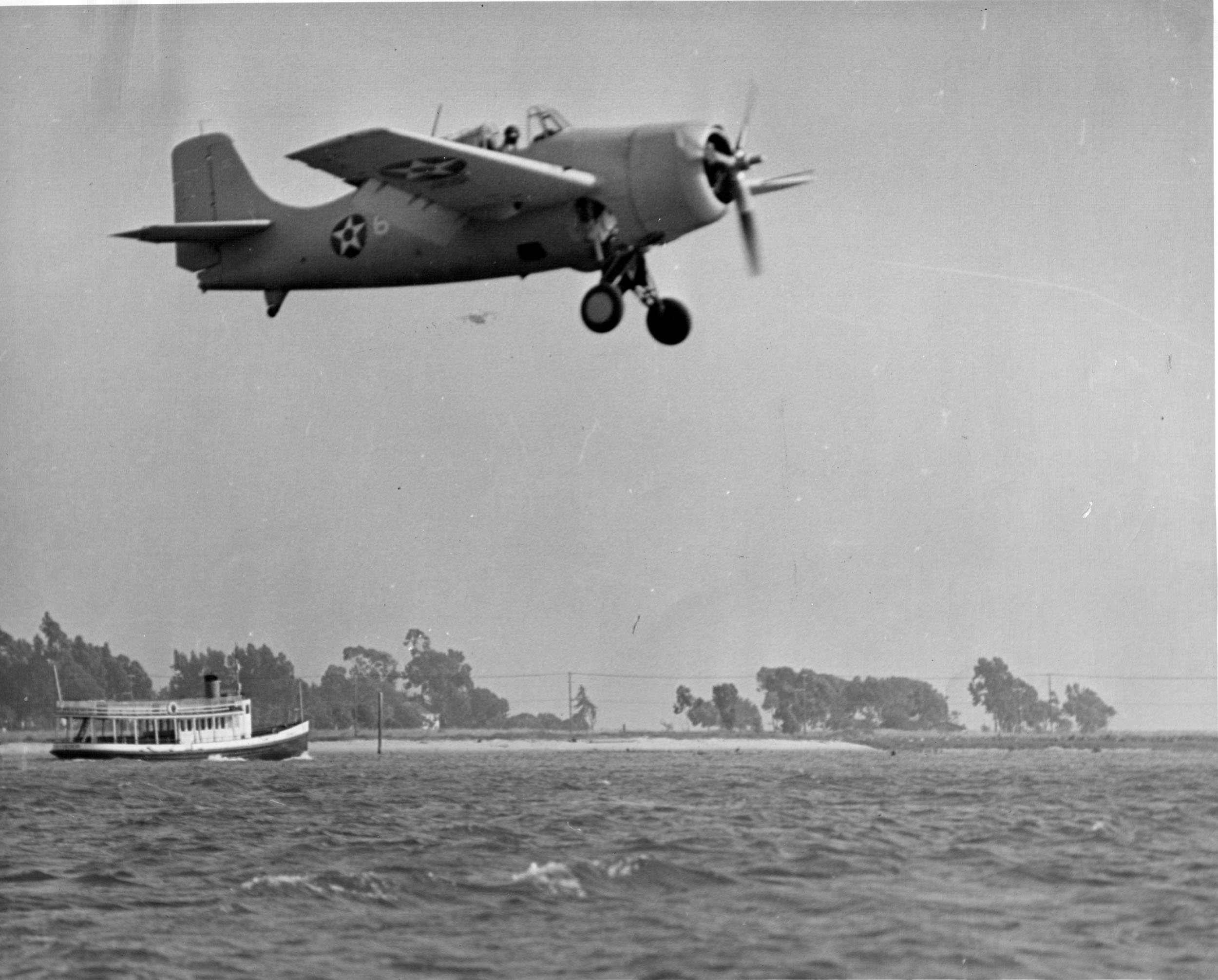
He reached the bay, turned toward Broadway, parked the car, grabbed his equipment and ran for the dock, scanning the sky as he did so. Spotted it almost at once – there in the distance making a turn, a Navy carrier plane. Must be it, he thought; can’t see anything wrong but look how slowly it’s going. He hurried toward the dock. The water taxi was there, its engine at idle, the skipper aboard – but so was a husky Marine who, holding a rifle across his body, blocked his path to the craft. “What’s the trouble, son?” he asked.
“Sorry sir. No unauthorized boats in the bay. Especially newspaper guys.”
Harry looked him over: a walking recruitment poster; square jaw type, tall and trim, hard as a rock, ridiculous shoulders, tapered waist, piercing eyes, and a nose that had taken a few. A 30-year man, he guessed, afflicted with a strong sense of duty. Toughest type to handle. He glanced at the plane; it was making another run; quite a bit lower this time; he’ll circle around again and next time take it in. Have to get past this guy. But how? Intimidation was certainly out and the hackneyed lecture on the rights of the press would never work with this jarhead. A low key approach, a bit of finesse – that might be the ticket. Worth a try at least.
“Look,” he said, “we got the tip from the Navy – an officer called the desk – you didn’t get the word? They must have forgotten to pass it along; always that way in the service, right? But that’s O.K., no harm done; now, if you’ll kindly step aside –“
Pretending the matter was settled he tried to slip past the marine who despite his size was quick on his feet and using the butt of his rifle easily checked the attempt. Then, as if the ancient civilian before him was unable to comprehend or perhaps was hard of hearing, he stated his message again – in a voice that could be heard in the barracks.
“I SAID YOU CAN’T GO OUT IN THE BAY!”
So much for finesse, thought Harry, who, toe to toe with the feisty marine, held by his withering gaze, feeling the rifle butt prodding his belly, opted for action instead. Using his camera to parry the rifle, he scooted around the startled marine, dashed to the edge of the dock and threw himself into the boat. The craft survived the impact, though it sunk a few feet in the water; the boat pilot opened the throttle, the engine roared in response, and the thrust put Harry flat on his back, a position he was content to maintain while attempting to recall from his limited days in the Army the range of a Springfield rifle. When he thought it was safe to do so, he sat up and took in the scene. There in the distance was a squadron of boats, motors at idle, bobbing about off the base at North Island; assembled in line for the rescue. He pointed and yelled to the boat pilot who nodded and altered his course, and the craft went happily bouncing along intent on joining the gang.
Those in the rescue party, all eyes on the carrier plane, failed to notice the oncoming craft until it was almost upon them. When Harry was spotted and promptly unmasked – (an agent of the fourth estate named Bishop, Harry Bishop) – and his disgraceful intention revealed – (take pictures to embarrass the Navy) – a powerful voice came over the water: “You! Fat guy with the camera! Leave the area at once!” Harry declined the offer but in a concession to Brass ordered his craft to the end of the line, clear of the rescue boats – and as it turned out, front row center for the splashdown about to occur.
The aircraft in trouble was a carrier plane with a damaged landing gear. The pilot had radio contact with officers on the ground and had determined a course of action: circle around, show them the problem, give them time to prepare. Take it in slowly and put it down softly close to the craft at the end of the line; most likely the boat in charge.
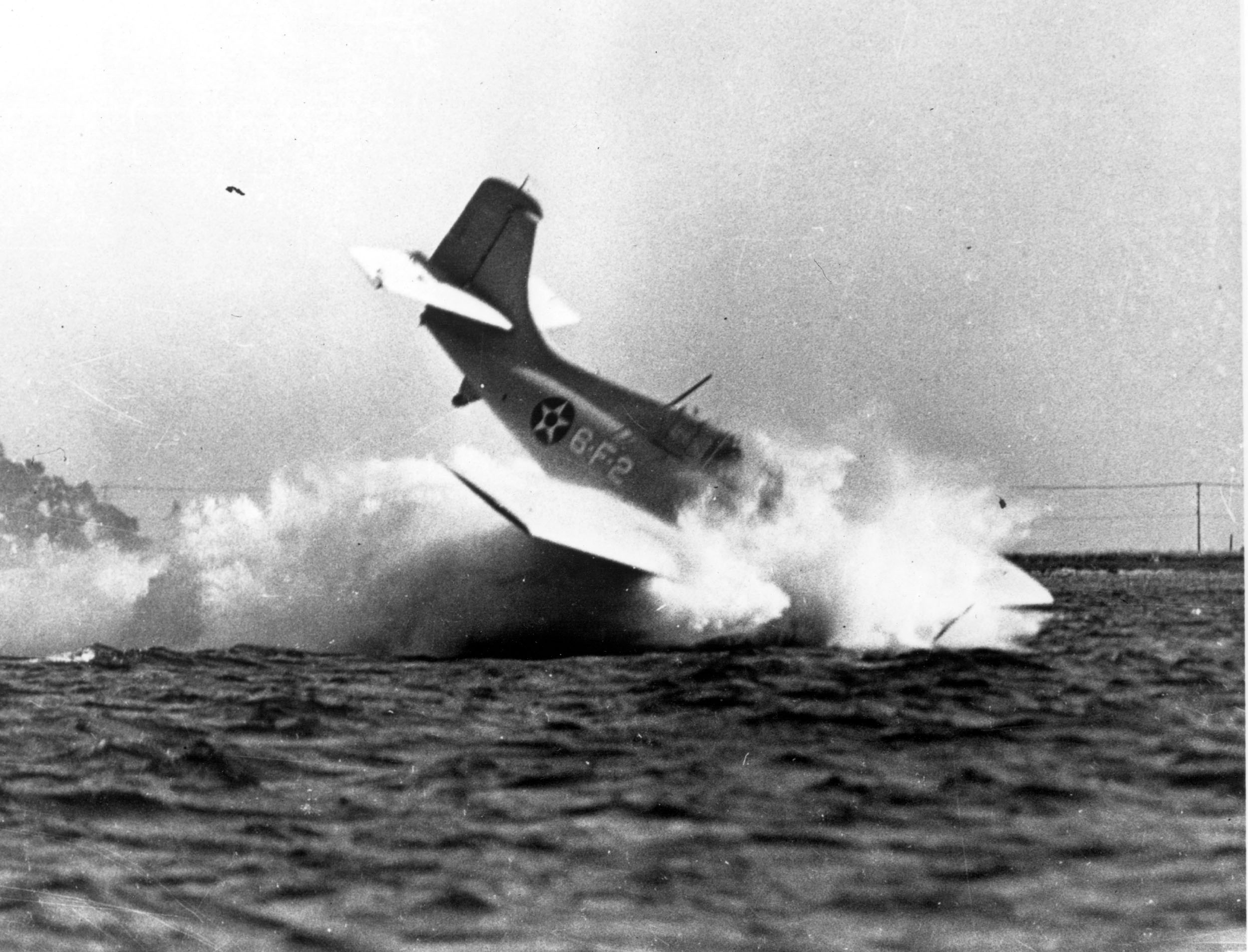
Harry, kneeling in the stern of the craft, his feet tucked under a seat, held his camera steady and panned along as the plane came gliding in from the left, dipping lower and lower, skimming the waves and cutting the water and leaving behind V-shaped sprays of foam.
He waited. With one of the motorized cameras available later he could have fired in sequence and selected his shots from a film roll. But the Auto Graflex he called “Old Betsy,” with its 4-by-5 film plates encased behind the focal plane shutter, required a manual change after every exposure – a time consuming drill – and he’d learned that for action shots he had to be right the first time. And so he waited till the plane did a flip and buried its nose in the water, then he triggered the shutter. He held steady a second or two, satisfied he had captured the action, then reloaded his camera while telling himself it was nice of the guy, landing in front of his boat as he did; it was almost as if he planned it.
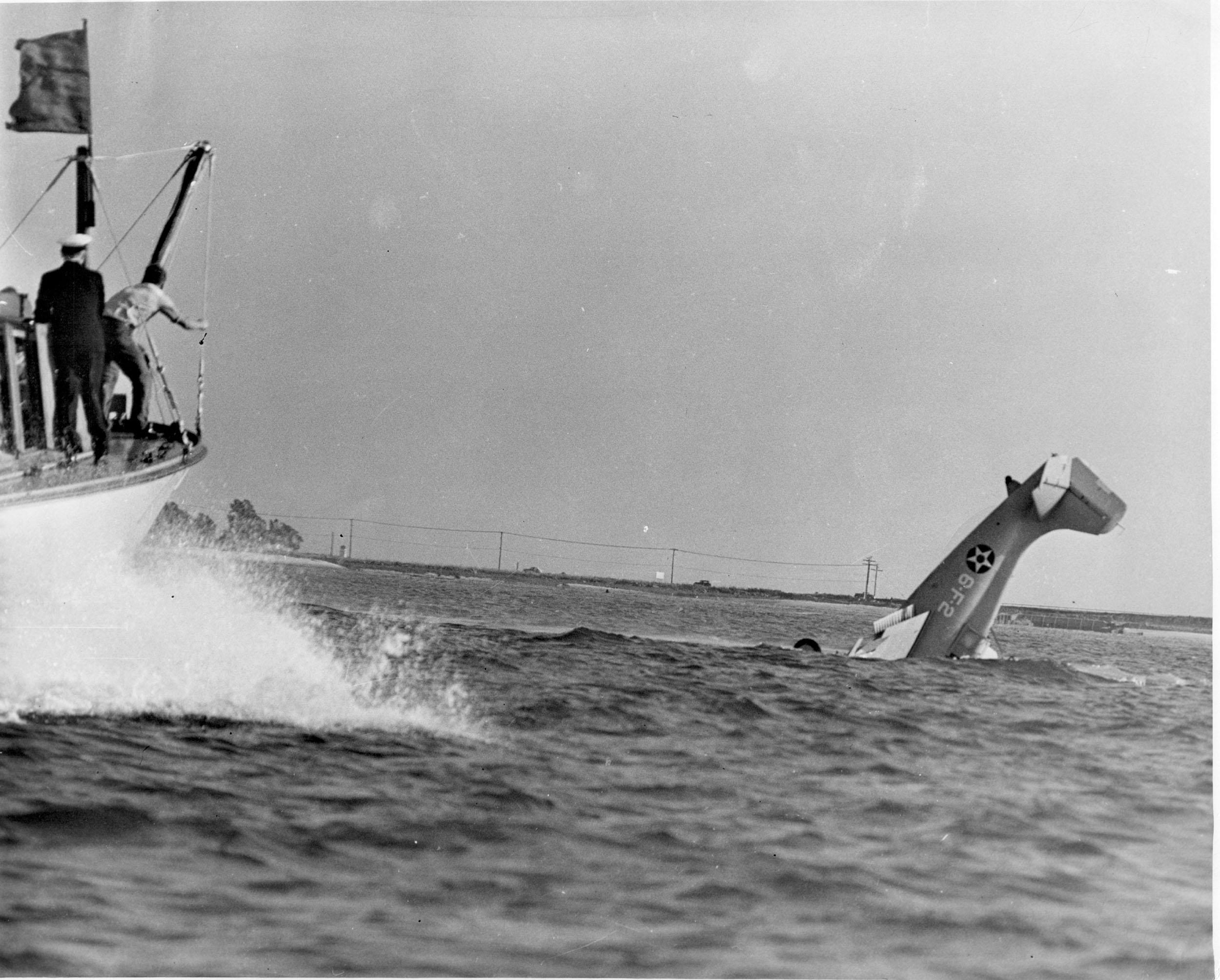
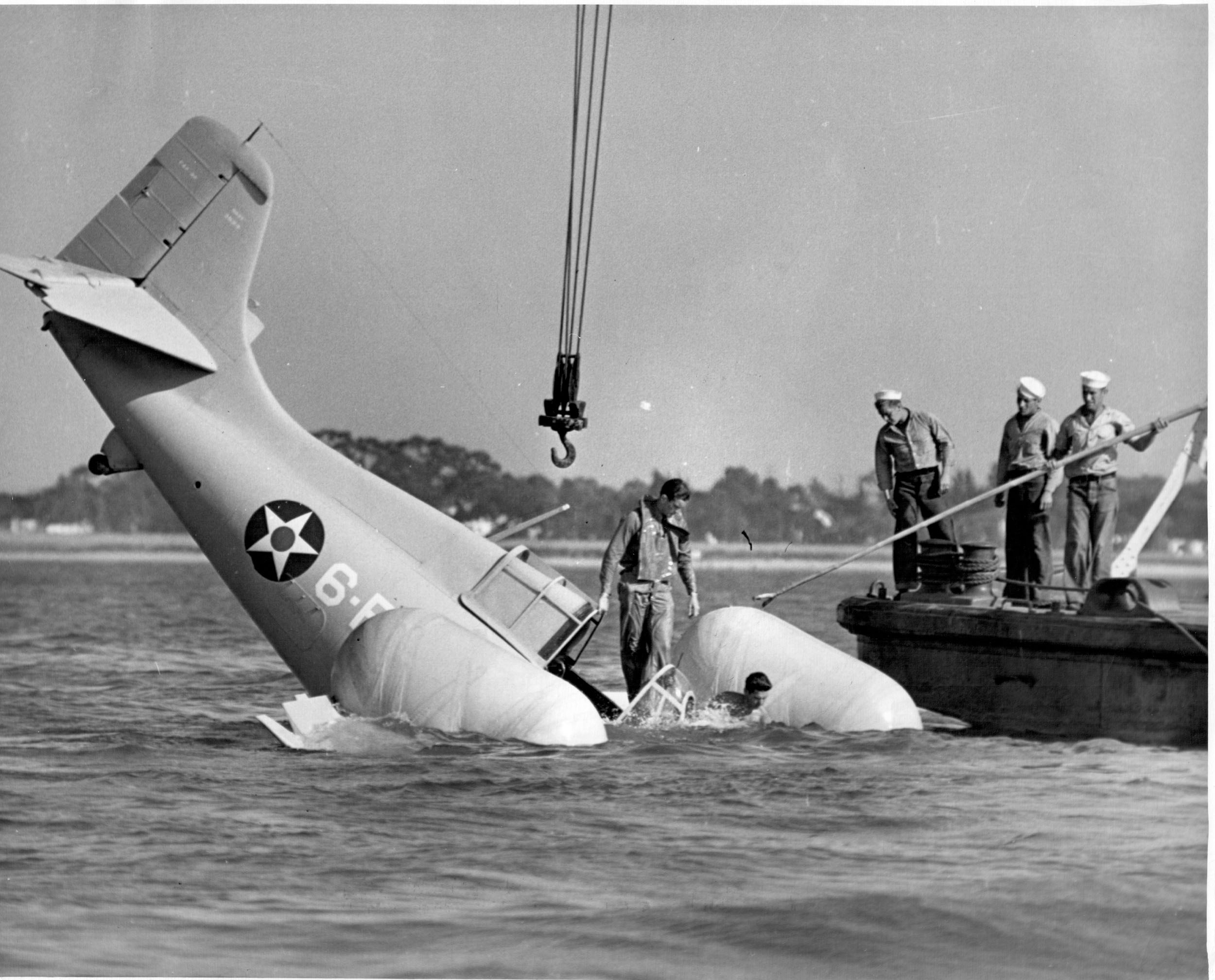
Though the plunge put the craft under water, its blister pontoons inflated on impact and popped the plane back to the surface. The pilot, bruised and shaken, crawled from the cockpit and stood on a wing watching the Navy come galloping to the rescue. Strangely enough the boat he had thought was in charge was maintaining its same position. And kneeling in its stern was a fat guy taking his picture.
Efficient crewmen, under the direction of the officer who had yelled loudest at Harry, quickly checked the blister pontoons that were keeping the boat afloat. The pilot, having done his job – the craft could now be salvaged – was assisted into a boat bound for the base before Harry thought of getting a close-up. He would hear about that, he knew; mug shots are needed in newspaper files. At least he had captured the action. He triggered his camera a few more times – you never know what the make-up guy will want – then ordered the pilot back to the dock at Broadway. Halfway in, he remembered the young Marine, his massive shoulders and piercing eyes and the nose that had taken a few. And he remembered the bolt action rifle.
“Make it the G street landing,” he yelled above the roar of the motor.
The print came up in the tank. Not bad, he thought, but the story should be handled with care; should not be embellished – a practice not unknown in the business – for it looks like a nose dive into the bay and curtains for the pilot. Needed here was an honest account of a skillfully handled splashdown and well conducted rescue with minimal damage to the carrier plane and none at all to the flier. He would keep his fingers crossed.
Both papers handled it well, Harry was happy to see. The stories were factual and his picture was nicely displayed.
Next day he was back on the job, upbeat but apprehensive. He’d bamboozled a young Marine who wasn’t the type to forgive and had flaunted Navy brass – and this is a Navy town – and so he wasn’t surprised when a Navy officer, young and erect, impeccably clad in whites, came striding into the newsroom and asked to see the man who had photographed the crash in the bay. Harry was ready to argue his case and had faith his editors would back him, but this is a Navy town —
At least, he thought, it’s not the marine he had shown his footwork to back on Broadway pier: that guy would have brought a firing squad, a last cigarette and a blindfold.
The officer introduced himself: Ensign E. H. Tennes, the pilot who crashed in the bay. He wondered if he could buy a copy of the picture that appeared in the paper “if it isn’t too much trouble.” And he ended his request with a “sir.”
For Harry, outwardly calm except for the bead of sweat on his brow, it was but the work of a moment – since he’d prepared a supply – to hand him a set of prints – and another one for his parents.
“Let me know if you need any more,” he called to the back of the ensign who had thanked him politely and was taking his leave.
* * *
The hot toddy was laced with an extra shot of one of the better brands of booze forced on Harry over the years by those who admired his work and did not believe he was, as he claimed, a “root beer and buttermilk man who never touched the hard stuff.” The booze, he said, was kept on hand only for special occasions and for the purpose it was now being used: to help him unwind after a grueling day.
Now, as he sat in his easy chair in the parlor of his home on Arizona Street explaining to Grace how he had worked his magic against incredible odds, he could feel it taking effect. But before he surrendered to sleep he had no trouble admitting he’d had his share of luck: the tips, the timing, the way things developed – face it, he’d gotten the breaks.
Not that he was overly modest – Harry was hardly that – but through a series of setbacks he’d suffered over the years he’d learned he was limited in what he could do. For recorded in his name during those trying years were numerous misadventures, a couple of major screw-ups and a youthful indiscretion that shocked the neighborhood.