He hung his coat and hat on a hook, sat down in the boss’ chair (it wouldn’t be needed for hours) and started his morning routine; looked through the assignments stacked on the desk and plugged the holes in the schedule; picked up the morning edition and checked the pictures and captions; scanned the headlines and skimmed a few stories, and, kidding himself he was up on the news, sneaked a look at the comics. Then he tossed the paper aside, removed his feet from the desk and started to walk to the darkroom. The telephone summoned him back.
“Jot this down in your schedule,” the city editor said. “County Courthouse – D.A.’s office – 3 p.m. – E. Drew Clark – polygraph test.”
“What kind of test?” asked Harry.
“Polygraph. It’s a lie detecting machine. That’s what they call it now.”
“Right,” said Harry, a little embarrassed. “I got it.”
“Good. See me before you leave.”
“Sure.”
He wrote it into his schedule and put the receiver back on the hook. Great assignment, he thought, certain the new device, whatever they call the thing, had never been used in the city. Should make a pretty good picture; it was already a heck of a story: man accused of killing his friend, chopping him up and hiding the pieces, then moving in with his wife, the rat.
Page One stuff, talk of the town. Blase’ reporters were discussing the case and even the copy desk scholar, who scorned sensation in news, saw fit to give his summation: “Sinful lust and murder most foul. Shakespeare minus the class.”
More like the pulps, thought Harry as he went on his morning assignments.
He got back before noon and had lunch, then worked alone in the darkroom, watching the clock all the while. Before he left for the courthouse, he stopped at the desk as requested.
“We have a minor problem,” the city editor said.
Harry noted the “we” but suspected (correctly) the problem would turn out to be his.
“The D.A. is playing it hard-nose. He won’t stand still for a story and he doesn’t want any pictures. He’s warned us to stay away.”
Or what? thought Harry. The guy doesn’t own the courthouse; just works there once in a while. He placed both hands on the editor’s desk and made his position clear.
“Listen,” he said. “We don’t want to scratch the assignment, right?”
“Hell no,” the deskman replied. “Just letting you know the score.”
“OK,” said Harry. “What’s his problem now?”
“He’s having trouble with Clark; had to talk him into taking the test; had to promise there wouldn’t be pictures.”
As Harry digested the news suspicion crept into his mind. Something funny here. The D.A. knew public relations. Would want a picture like this – and would know how to handle Clark.
“How do we know this stuff?”
“A guy in his office tipped our reporter.”
Harry looked wise and nodded his head. It was just as he thought. Foxy guy, the D.A. He’s orchestrating the thing. A promise to Clark, a leak to the press, he gets what he wants from Clark then reluctantly gives in for the picture.”
“Don’t worry,” he said aloud. “Just save a spot on Page One.”
“That’s the spirit, Harry. Get a good action shot. Clark hooked up for the test; D.A. grilling him hard.
“One other thing. You’re on your own. The reporter is staying away; he plans to corner the people after they’ve finished with Clark.”
On his way down the stairs he met a reporter who, noting his heavy equipment, said, “Hot assignment, Harry?”
“E. Drew Clark,” said Harry, “taking a polygraph test.” The reporter, question mark etched on his forehead, stared blankly at Harry and did not reply. Harry explained: “Lie detecting machine; that’s what they call it now.” Then he went on his way a bit more sanguine than usual.
Seven short blocks to the courthouse; catch the trolley at Broadway and Third, get off at Broadway and Union; two blocks south to F Street; a few more steps and you’re there. Mulling it over each step of the way he could think of no other solution. The D.A. was playing a game. Squelch a picture like this? Who was he trying to kid? He couldn’t buy this kind of PR. The public would see him as hero – and the wife-stealing scrub as the heavy.
“This picture’s in the bag,” he told himself – “that is if I’m reading it right….”
The elevator door was open and people were crowding inside. When they saw him approach with his heavy equipment they shuffled about to make room. Though touched by the gesture Harry declined, smiling and waving his hand, and the lift departed without him.
Why inconvenience that nice group of people? He’d walk to the third floor instead. It was only two flights of stairs….As he stood on the third floor landing gasping for air, sweating profusely, and fearing his heart would pound through his chest he suspected he’d made a mistake. He should have squeezed into the lift – and the heck with that nice group of people.
Clutching the railing with one trembling hand, he discarded his gear with the other. Relieved of the heavy equipment, no longer at war with the stairs, his heart beat slowed to a reasonable rate and he soon stopped panting and wheezing. He took off his hat, mopped his brow and sat down at the top of the stairs and told himself you gotta lose some weight.
Lucky for him he was the kind of a guy who allowed himself plenty of leeway; it pays off on screw-ups like this. Now he had time to relax. He sat there shaking his head. What had he been thinking? Lugging that heavy equipment up two flights of stairs overweight as he was – oh well – in another minute or two he’d walk down the hall to the conference room and lay for the district attorney.
He got nervous after a while and decided it was time to get going. As he started to pick up his bulky equipment he heard a commotion – a shuffling of feet and a hoarse voice whispering “hurry!” – coming from down the hall, and even before he looked his heart started pounding again. The door to the room was open and men were being herded inside – and the D.A. was doing the herding. He was pushing people along, hissing instructions to “move it,” and darting glances at Harry, his head as if on a swivel.
Harry was stunned. Three p.m. he’d been told; it was only 2:30 now. Someone was pulling a fast one. He couldn’t help it, he swore.
“Darn it!” he said.
He grabbed his camera and gear bag and on the aching feet that failed him in the Army, bolted for the door. Big as he was, he was making good time, running like Bronco Nagurski, but a form shot out of the shadows and stopped him short of the goal. All he got for his effort was a cross body block, a door in the face and a taunting laugh from inside the room.
He pushed the assailant aside, grabbed the doorknob and rattled it hard until he was sure it was locked, then gave it another rattle to show that he was displeased. After rejecting an urge to kick in the door he backed off a couple of steps. “Take it easy,” he said to himself. “Wait till he opens the door – then nail the son-of-a-gun.”
Because he’d taken a pretty good jolt he examined his precious equipment – camera, tripod, magnesium packet and flash gun tray – and made sure the stuff was O.K. Then he brushed himself off, straightened his hat and turned to see what kind of creep had thrown that illegal block.
Gorilla type, he saw. Short but powerfully built. Wearing a bailiff’s costume. But no bailiff he knew would have acted that way; this guy was new on the job. And no wonder he could still feel the jolt; he had shoulders as wide as a church door – and eyes like his old Army sergeant.
“No pictures for you, big boy,” he said. “You might as well go home.”
Harry did not respond; he was sorting things out in his mind. A year earlier the D.A. had been knocked on the head during a criminal trial, and here was this wide body type newly assigned to the courthouse. It kind of adds up, he thought. Or was it the Page One picture? Probably both…
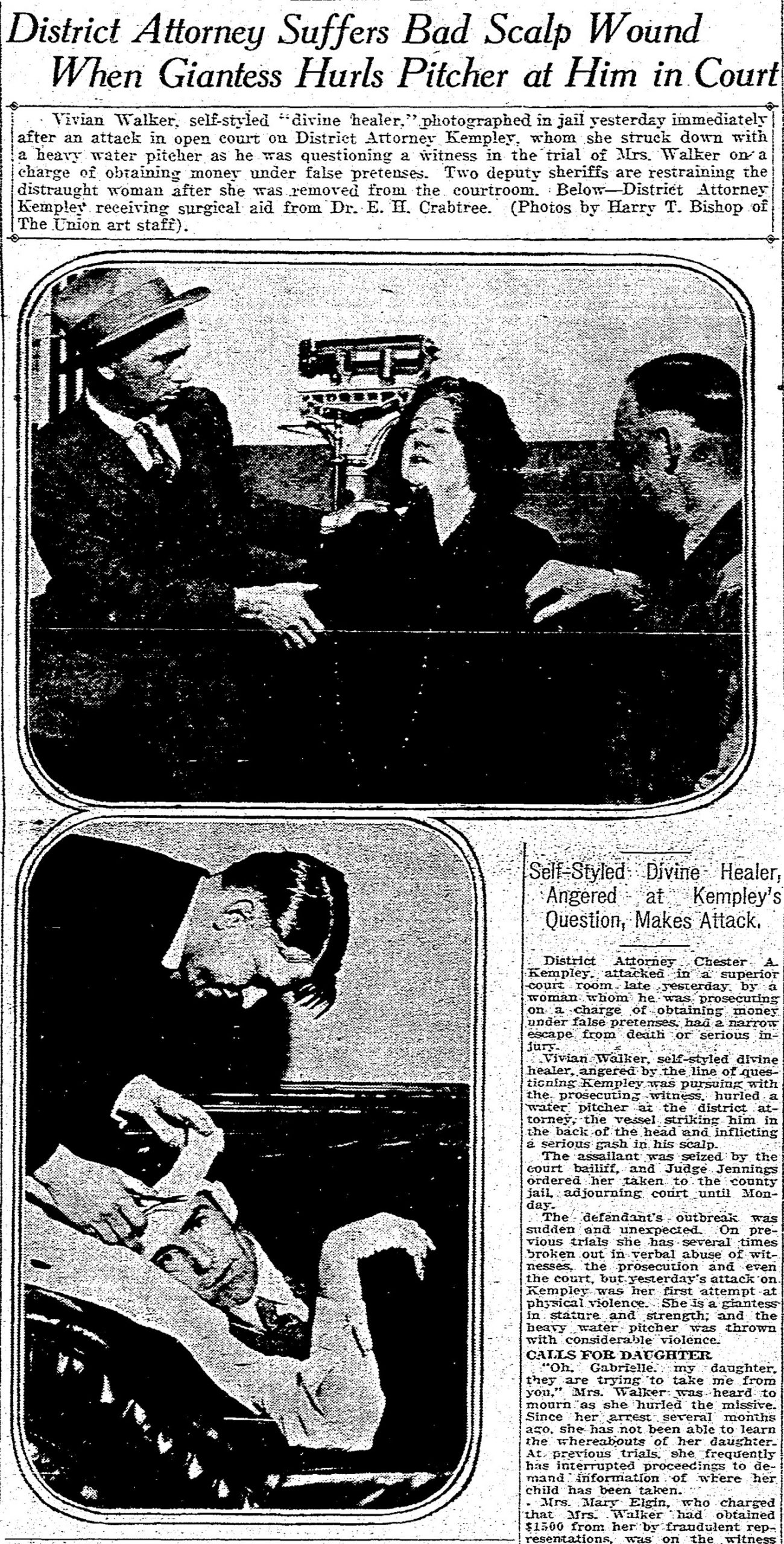
Previously the D.A., Chester A. Kempley, while grilling a woman faith healer during her trial for fraud, had incurred her displeasure to such an extent she’d grabbed the nearest thing handy – a heavy water pitcher – and banged him on the head. The woman, “a giantess in stature and strength,” according to one report, had erupted with speed and precision and Harry had missed the shot – and he hadn’t done any better in the noisy confusion that followed. Ministering angels had rushed from their seats to aid the fallen D.A. and though later described as a “heartwarming show of concern,” to Harry it seemed overdone. It shouldn’t take twenty five people to carry the guy to his office and dump him on a couch. And why hover over the body? As if that would do any good. All Harry could see was their backsides, which was not the picture he wanted. When he asked them to step aside they called him a newspaper ghoul and refused to get out of the way. And he got no help from the bailiffs who had tackled the giantess in stature and strength and had all the trouble they needed.
He got a break when the doctor arrived accompanied by two additional bailiffs. The doctor, an officious, take-charge type, quickly assumed command.
“Step back, you people,” he said. “Give this man some air.” The bailiffs started to clear the room and Harry pretended to help. When the last of crowd had been pushed through the door he stood on the threshold holding back gawkers while fixing the stuff for his flash gun.
The doctor brought the patient around, bandaged his head, patted his shoulder, and stood back to admire his work. Kempley looked like he was taking an eight count; he stared with unseeing eyes directly at Harry’s camera – and probably didn’t notice when the magnesium powder exploded and the camera shutter clicked.
One shot was all Harry could get. Before he could flip the slide for another an angry doctor and two husky bailiffs hustled him out of the room.
“I could have handled the bailiffs,” Harry said later, “but how can you mess with a doctor?”
He later learned the Page One picture – half reclining, dazed D.A., staring blankly into the lens of the camera, had not been savored by Kempley, who when able to shout again complained of lax security that enabled nosy photographers to embarrass public officials serving the cause of justice.
If Harry’s assessment was right the D.A. wanted better protection; hence the guy with the body. OK, he thought, give him Round One. Round Two will be different. He’d have his tripod in hand. . . .
He put the bailiff out of his thoughts. The D.A. was the main adversary, the sneaky son-of-a-gun – bowing to Clark’s demand – hiding behind a locked door –
But he had to admit he’d been wrong. The D.A. was playing it straight; give him credit for that; he was heeding his promise to Clark.
Unless —
Unless that stuff in the hall was just a show for Clark to get him into the room, hook him up for the test, and when it is over, reluctantly give in for a picture.
Forget it, he told himself. no use in trying to figure it out. It was driving him crazy. Just be ready when they open the door.
Though “polygraph” had surprised him, Harry knew lie detecting machines and could guess what was going on in the room: E. Drew Clark on the hot seat, same crooked smile on his face; suit coat off, sleeves rolled up, blood pressure cuff on his arm, tube attached to his chest, electrodes in the palms of his hands; expert asking the questions, D.A. watching the suspect, hoping to prove he was lying in denying he’d knocked off his friend, George Schick.
A first for Harry – if he could get the picture….
Leonarde Keeler, a young police officer from Los Angeles, had been asked to conduct the test using the device developed by John A. Larson of the Berkeley police department. (Keeler, Larson and Berkeley Police Chief August Vollmer were to become famous criminologists credited with popularizing the lie detector still in use into the 1990s.)
The D.A. was certain that Clark, unable to resolve a problem with Schick by peaceful means, did the next best thing: he got rid of the body. The D.A. was also certain – after digging up half of the city – that Schick’s remains would never be found. Now he was hoping the polygraph test would cause the man to betray himself.
Clark had refused to take the test until assured the results would not be admissible as evidence and he’d be shielded from press photographers – including the fat guy who had taken his picture too many times already.
Reporters had learned of the test, the city desk had made the assignment, and Harry, though slickered, blamed himself for being too slow and seeing a door slammed in his face.
No way he’d fail this time. He’d be there when they opened the door. When people learned the new device had been used right here in the city they’d expect to see the picture. He couldn’t let them down; couldn’t let the papers down, coverage had been so extensive. Fascinating stuff, nicely displayed and very well written. He was proud of the guys with the uprights.
Now it was up to him….
He leaned against the wall, cradled his camera against his belly and considered the approach he’d take when the D.A. opened the door. He wouldn’t show resentment despite the shabby treatment. Hi there mister Kempley – like to get a shot – only take a minute –
There would be trouble of course. Even if Kempley agreed to a picture he’d have to show some resistance if only to placate Clark –
Remembering the bailiff, he took the tripod out of the bag, gave it a couple of practice swings, then placed it against the wall. Just a hint, you little scrub –
The little scrub hadn’t noticed; he’d been pacing about, checking his watch and peering nervously down the hall. Harry nodded in satisfaction. A nine-to-five type, he determined. One of those clock-watching guys; they suffer if still on the job a minute or two past the end of their shift. He raised his wrist and noted the time. Just as he thought – five after five, poor guy. . . .
“Don’t let me detain you,” he said; he couldn’t resist the dig.
The bailiff stopped pacing, and staring at Harry, shook his head slowly, a sad little smile on his face.
“Forget it,” he said, “you’re wasting your time. No use your hanging around. Face it, pal, you missed the shot; when they open the door it’s over.”
He sauntered toward the stairs.
“Be sure and see your paper tomorrow,” said Harry.
The bailiff paused and turned, and now his eyes were deadly and cold; he was rolling his shoulders and clenching his fists and looking his meanest at Harry.
“A tough little guy,” Harry recalled. “but I was able to stare him down.”
His 220-pound bulk and the grip he had on his tripod may have had something to do with the bailiff’s decision to fake a casual exit with only a passing remark, “OK big boy, waste your time – go ahead.”
Harry, left an uncluttered hallway, felt a sense of relief. With bailiffs no longer infecting the scene things began to look better. He thought about setting up – film plate in camera, camera on tripod, flash gun powder in tray – but decided to wait till he straightened things out with the district attorney.
He shifted his thoughts to the case against Clark as reported so far in the paper. If what the prosecutors were claiming was true the guy was truly a dangerous nut. Hard to believe – that little runt in the business suit and horn rim glasses – pulling off something like that.
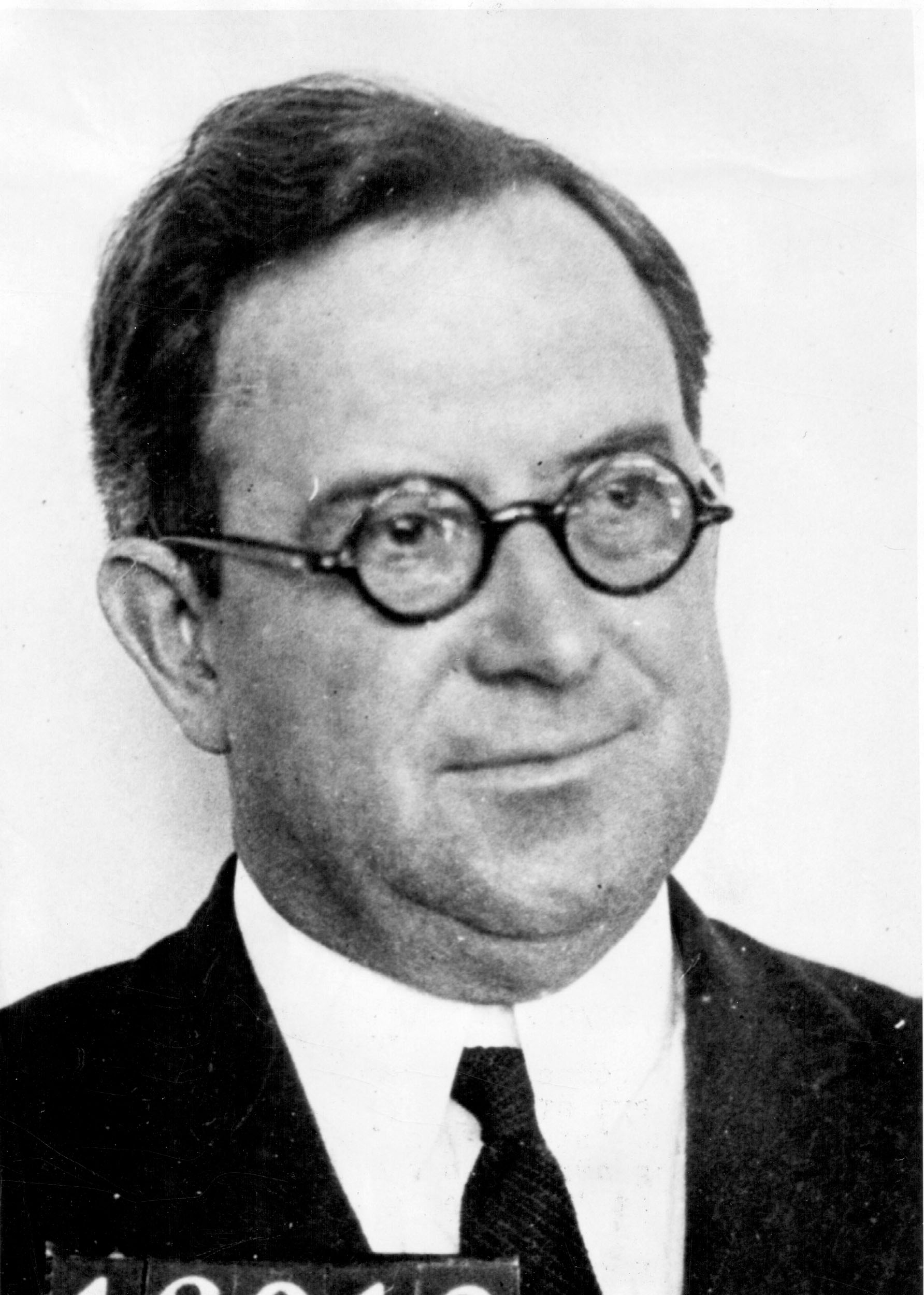
But the D.A. had laid out his case, and it looked pretty good to Harry. . . .
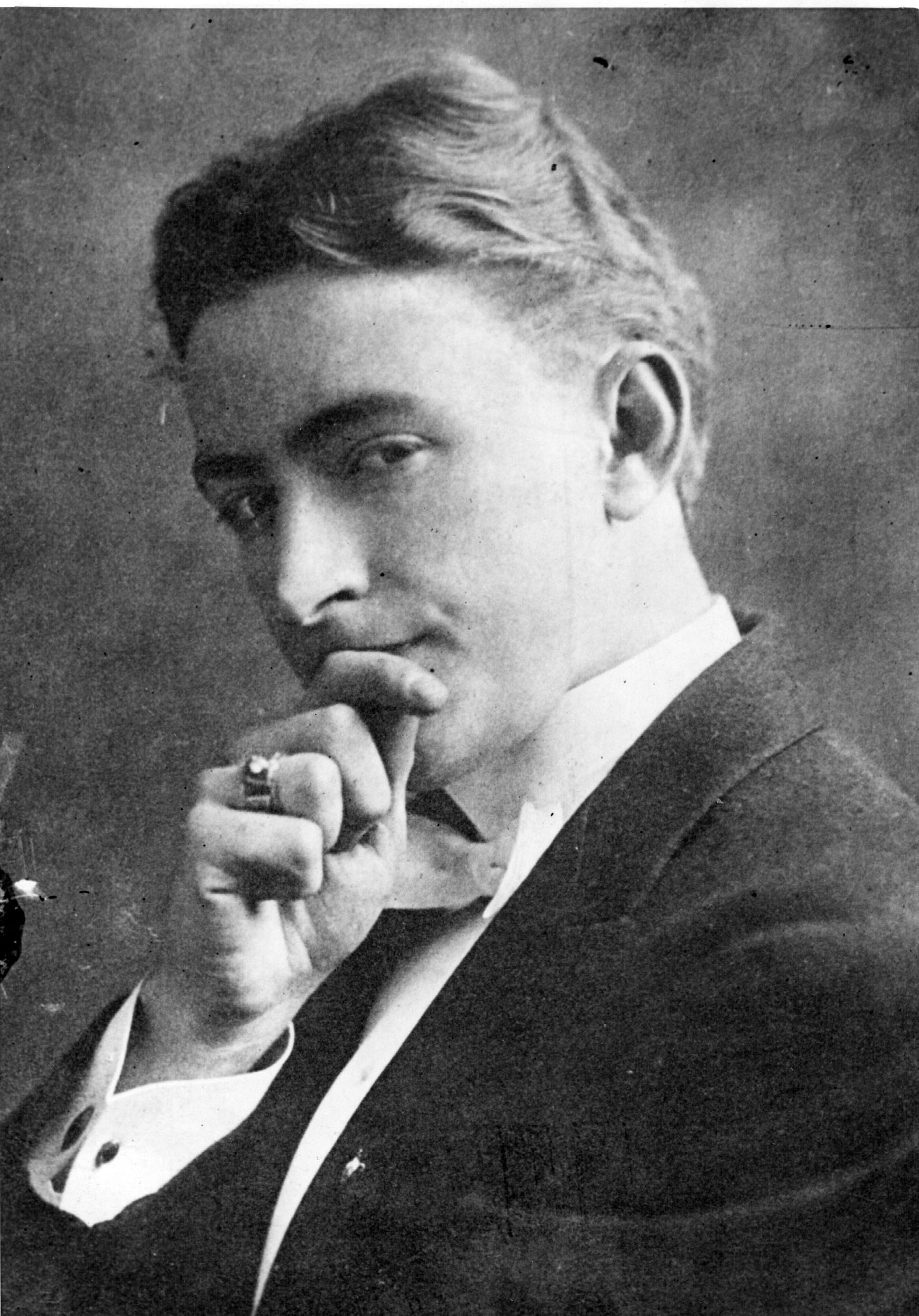
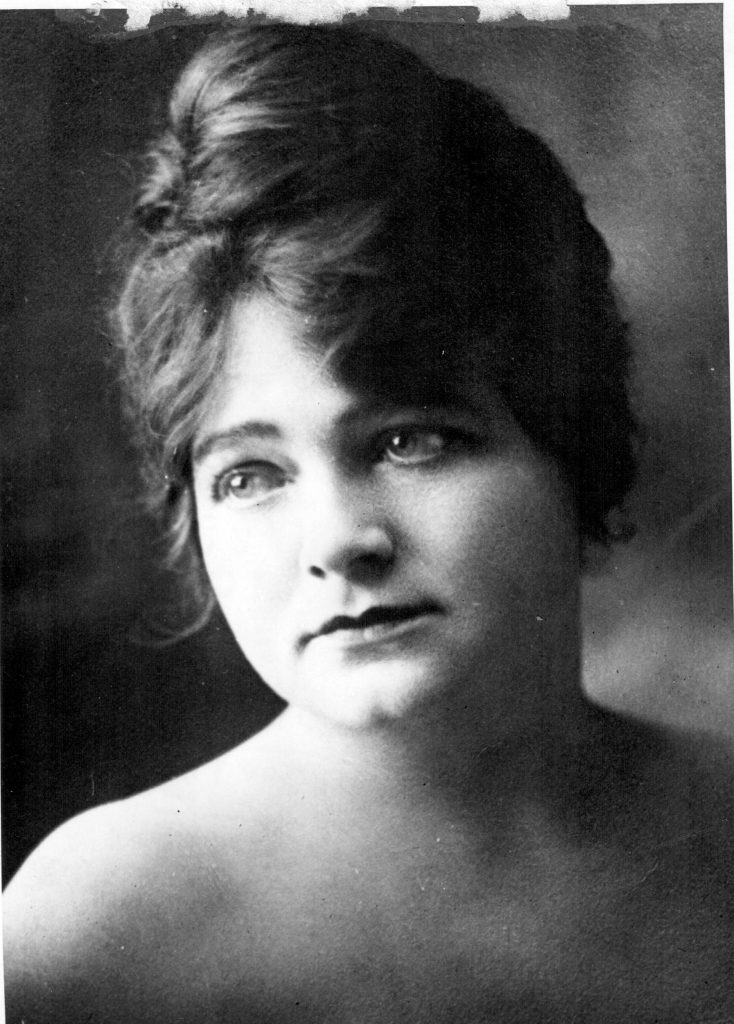
Schick, a successful broker, had brought his wife and two children to San Diego in 1922, had bought a house in Kensington Park and had continued to prosper in business. His wife met Clark in a furniture store where he was employed as a salesman, and, impressed by his courtly manner and remarkable voice, accepted his offer of friendship. In subsequent meetings the two became close, how close was later revealed during chats with the district attorney in her cell in county jail, where, having been pinched on a forgery charge, the scales had dropped from her eyes and she now saw Clark as a louse. Hoping for understanding and possibly kinder treatment she recounted the unabridged story of her sordid involvement with Clark – first to the district attorney, then to the county Grand Jury, and later to the judge at the trial. . . .
She was blinded by Clark, she said; unable to resist his persistent attempts to form an improper alliance. He was such a man of the world, had varied experience in business, had roamed over half of the globe. He’d acted in motion pictures but the field was too restrictive and show business people were flighty, and he’d declined a proffered contract.
Such had been his appeal, she felt she could only be happy with his close and continued companionship. Her husband had accepted him as a friend and had taken him into his business. He’d allowed the Clarks to live in a house he owned and hadn’t charged them rent.
Clark had remarkable powers, could see things in the future. In a vision he had, he saw them together – in a world without Mr. Schick.
“You’ll see,” he said. “the day will come when he’ll no longer be between us.”
When, on September 7, 1923, she noted her husband’s absence and reported the matter to Clark, he told her not to worry. Schick had gone on a business trip to Mexico. Before he left he’d borrowed $5,000 (from Clark) which she was to repay by cashing bonds from the Schick safety deposit box; Schick had left him the key. Instead of tapping the bonds, Mrs. Schick gave Clark $4,000 in partial repayment pending Schick’s return. Later, Clark reported that based on another vision he was certain her husband was dead, killed in a fight with business partners in Mexico. He would help her manage the business, but first they needed a document giving them power of attorney. This required a signature exactly like Schick’s. Coached by Clark and his wife, she produced a usable version and she and Clark began living together in a house in El Cajon Valley with a stake of $5,000. Mrs. Clark was shunted off to an apartment in town, and the old Clark house was abandoned, pending his plan to insure the place and burn it down. Time passed and Mrs. Schick gave birth to a child by Clark.
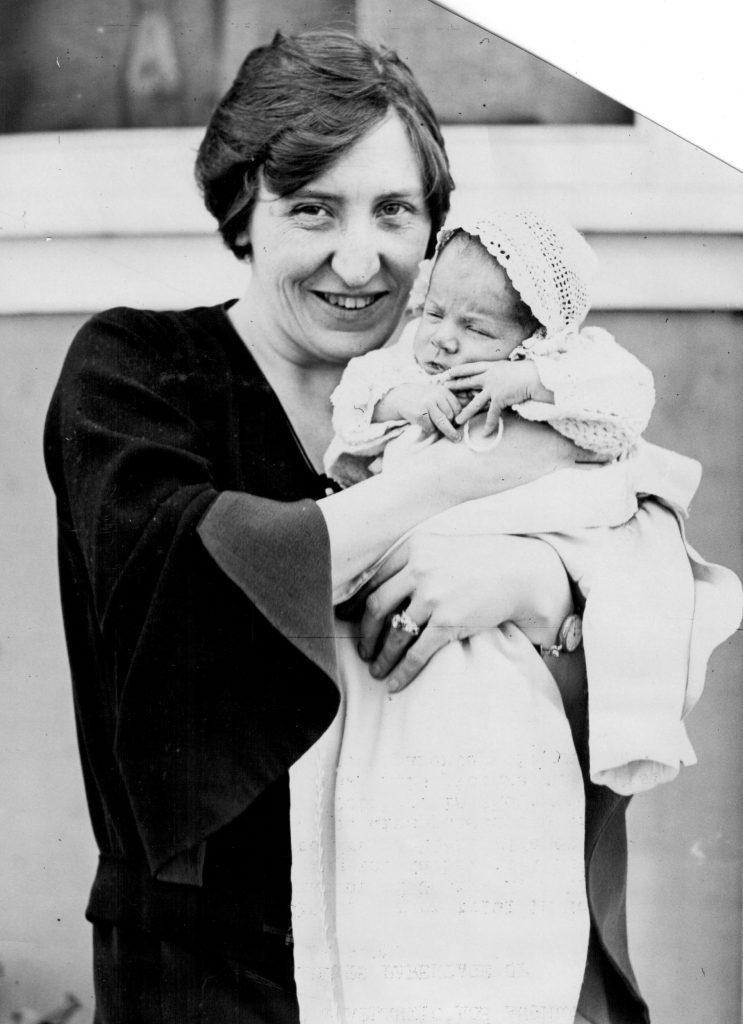
Schick’s disappearance had puzzled his brother Martin who lived in nearby Bellaire. Less gullible than Mrs. Schick, wary of E. Drew Clark, he made his suspicions known to police and the press and hired a private eye. But the initial break in the case came when Clark asked the State Department to certify Schick’s death so Mrs. Schick could collect on her husband’s life insurance policy. A State Department agent, sent to review the matter, discovered the forgery and summoned city police who arrested Clark and Mrs. Schick and escorted them to jail. Mrs. Clark was arrested next day. (The women were to spend some time in jail but charges against them were later dropped as they testified during various phases in the case against Clark.)
When Harry went to the jail to photograph Clark he found him unconcerned and wearing a crooked smile. He agreed to pose for a picture. Sighting in on Clark, the smile seemed more like a confident smirk.
“Doesn’t he know they suspect him of murder?” Harry asked the jailers.
“Sure he does,” was the answer. “But he thinks he’ll beat the rap. They can’t convict him of murder, he says, unless they find the body. And he says they won’t find the body.”
While Clark sat in jail and police continued their fruitless search for the missing broker, the D.A. gathered evidence and finally filed a murder charge in February, 1924.
The evidence included a statement volunteered by John V. Hendrix, a Tennessee mountaineer and veteran whiskey distiller who’d killed his business partner during a quarrel and had been sentenced to death by hanging. Awaiting the outcome of his appeal, he was placed in a cell with Clark who, he said, told him he strangled Schick, dismembered the body and hid the pieces. The confession, he said, had followed his own admission of murder and his dread of death by hanging. Clark had become unnerved, threw his arms around Hendrix and with tears in his eyes told him his painful story: The murder had taken place in Clark’s home after the men had argued, not about Mrs. Schick, but about money Clark owed him. While Schick was preparing a receipt for the return of the money, Clark grabbed him by the throat and choked him to death. He then dismembered the body, burned the flesh off the parts, and put the parts in a box. He wouldn’t tell Hendrix what he did with the box.
Hendrix, who had turned to religion after his arrest and conviction, told his story numerous times to various officials and courts “because it’s the right thing to do.” But they hanged him anyway.
Harry kept hearing from jailers that Clark was confident he could never be convicted of murder unless a body was found – and he was equally sure the body would never be found.
“He keeps saying corpus delicti,” the jailers told Harry. As for the forgery charge, that would be dropped when they failed to convict him of murder.
Harry later admitted he had the same kind of gap in his knowledge of law as Clark in failing to understand the meaning of corpus delicti: the body of the crime, not the body of the victim.
“Once a reporter explained it to me, it was easy to understand,” he said. “Clark had to learn it the hard way.”
* * *
When Harry heard noises inside the room that told him the meeting had ended, he picked up his gear, jumped for the door and was ready when it was opened. He pushed his way into the room, placed his gear on the floor, planted his feet on the threshold, and spread his arms to cover the doorway.
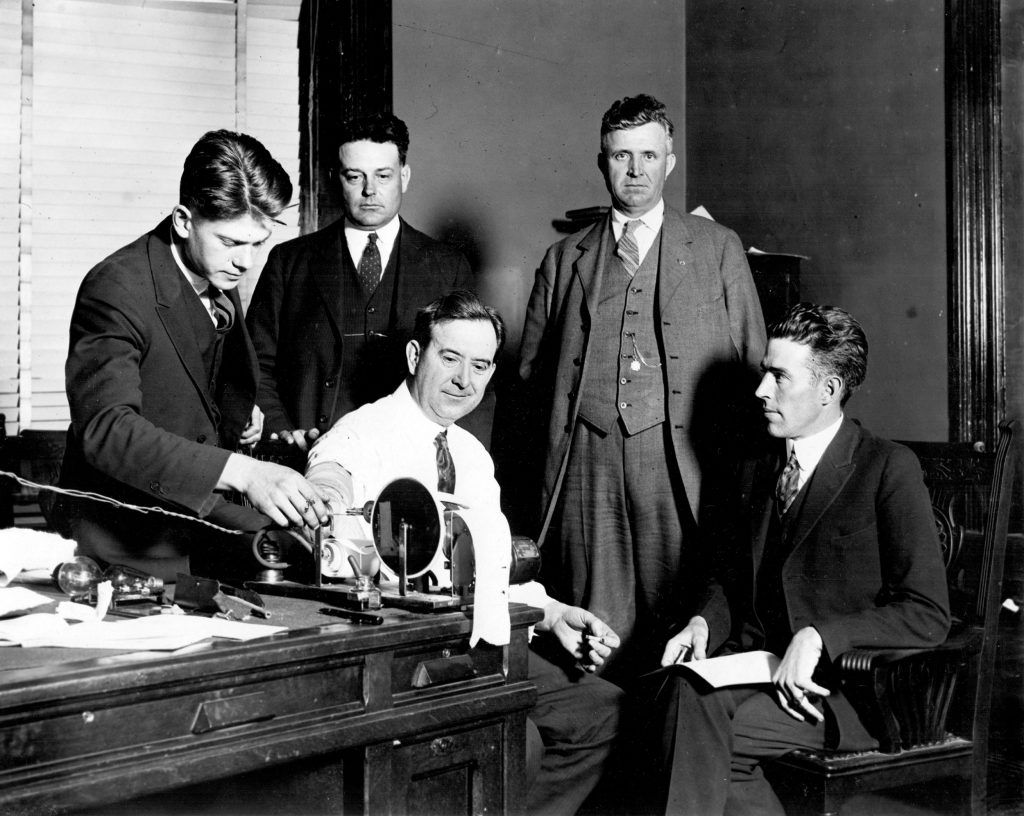
“Stay right where you are,” he said in a booming voice. “Nobody leaves till I get a picture.”
The D.A. and his men who had started to put on their coats and hats, Clark who was free of the polygraph wires and tubes, and the expert who had started to pack the device, stood frozen like figures in a comic tableau, and before they could move Harry locked the door and started his standard harangue on freedom of the press and the public’s right to know. His pitch was all but lost in cries of anger and outrage and disrespectful statements regarding the rights he was claiming. He was losing ground, he later reported, when the district attorney stepped in and saved the day.
“The sooner we accommodate this fellow,” he told the others, “the sooner we can all go home.” The concession was a welcome relief to Harry who acted quickly before Clark could think of protesting. Clark, perhaps confident his lies had gone undetected by the crude machine, had settled back with a scornful smile during the heated debate. He’d rolled his eyes at the D.A.’s reference to “home” – his home, after all, was a jailhouse cell – but now he shrugged, removed his coat and allowed them to attach the tube to his chest.
Working quickly, Harry mounted his Auto Graflex on the tripod, fixed the flash powder in the tray and sighted in on the primary target, E. Drew Clark. It wasn’t quite the picture he wanted; too obviously posed; D.A.’s men stiff and somber; Clark with a cigarette in his hand. Best he could do. He set off the flash and triggered the camera.
(“This was 1924,” he said later. “Cameras were primitive and you couldn’t snap off a series in natural light while chatting them up and getting animation. You had to reload after every shot; you had to make much longer exposures, and if you were inside you had to use flash powder and an exploding cap. I wanted to shoot the actual test; I wanted Clark to get rid of the cigarette, but I didn’t make any suggestions. I was afraid they’d jump me.”)
He was satisfied that at least he had the picture of Clark apparently taking a lie detector test. He thanked the men but as he expected got no response – except for Clark who winked and flashed his crooked smile. He packed his equipment and left, feeling he’d fought the good fight.
He returned to the office, tired but happy and proud — until the city editor told him that Mrs. Clark and Hendrix had been given lie detector tests earlier in the day unknown to anyone on the paper.
“The D.A.’s office called,” the city editor said. “They said to be sure and tell `that fat photographer’ about the shots he missed.”
The message took the luster off his triumph. All that stuff in the hallway – slamming the door in his face – pretty sharp guy, the district attorney. He put on a show for Clark – and he’d slickered Harry as well.
But did he really rig the thing? Thirty years later, recounting the story, Harry still wasn’t sure….
He took another blow later that week when he learned he was used by the district attorney’s office in an overly theatrical stunt to panic Clark into confessing. Clark had complained that his jailers had placed a gigantic blowup shot of “his friend” George Schick outside his cell one evening and kept a light on it all through the night in a crude attempt to upset him. Harry remembered making the blowup at the request of the district attorney’s office and giving it to a member of his staff. He saw the humor – after a while – but the joke was also on the D.A.
“If they thought Clark would fall for that, they were fooling themselves,” Harry announced in the newsroom.
The trial started. The D.A. weighed in with tons of evidence – all of it circumstantial – and won the case going away. It became a classic in California judicial history, helping to refute the belief that a body is required for a conviction in a murder case. The judge, Edgar A. Luce, made what had to be a courageous decision in allowing the evidence despite the missing body.
“We have to pioneer in this case without having much more than principles to guide us,” he said, in answer to a challenge to Hendrix’s testimony. “An incident in the case might be explained by counsel, but the chain must be taken as a whole.”
He cited the quarrel in Clark’s house, the burning in the back yard and the odor that caused a neighbor to close her windows, the sighting of Clark in a canyon, the finding of Clark’s car covered with mud and brush, the forgery attempt, the confession reported by Hendrix, Clark’s sordid union with Mrs. Schick, and his attempts to sell Schick’s jewelry.
The jury deliberated three hours and found Clark guilty of murder in the first degree. They recommended life in prison. Jurors said Clark glared at them throughout the trial as though to control them by means of his superior mental powers. And, according to his jailers, that’s what he thought he could do. The night before the verdict, he told the jailers he had the jury safely under control and they would set him free. But when the verdict was announced he slumped in his seat and had to be helped from the courtroom. But jailers laughed when told to mount a suicide watch through the night, and as they predicted by morning he was his jolly old self, criticizing his lawyer, belittling the judge, and predicting a successful appeal. On the day he was convicted he maintained his composure as the judge described his actions as the most “brutal” and “horrible” in the “annals of crime.” But on the day he was sentenced he leaped to his feet to denounce the judge – for citing the theft of the jewelry.
“The story (about the jewelry) is all a lie!” he shouted. “A rotten, vicious lie!”
The crooked smile was missing in the picture taken that day.
“Someone else took it,” said Harry.