It was late at night in April, 1925, at the end of a typical work day, and Harry, wrapping things up in the lab, was not his perky, old self. He had followed his usual routine; had spent the day taking pictures and after time out for his supper had tackled the processing work, and when he had finished it was almost 10 o’clock, a little later than usual. He had souped the film, made the prints, typed the notes for the captions, filed the negs with the proper I.D.s, and tidied things up in the lab.
Ordinarily, at this time of night he would drop off his package of prints and head for home and loved ones humming a cheerful tune. But tonight on the way to the newsroom he was droopy and hollow-eyed, his waddle less sprightly than usual.
It wasn’t the deadly routine or the ultra long hours that caused the flagging of spirit; it was the fear he was losing his touch. Look at the lackluster pictures – ordinary, commonplace pictures – he would offer the city desk. Useful to illustrate stories and break up the pages, but that’s all you could say for the stuff. No dazzle, no spark – a heck of a rut he was in.
True, editors handed out static assignments, they hadn’t the time to be clever, and Harry blamed only himself. It was up to him to add the artistic touch, take a static assignment, improvise a bit and turn it into a winner. In the past he’d been successful, at least more often than not, but somehow he’d lost the knack. Today, for instance, every contrivance had failed and he’d had to rely on the backup shots he always took just in case. In the package he carried tonight were good, professional prints, properly captioned and carefully cropped – and destined for inside the paper – or maybe the waste paper basket: service club gavel exchange, military change of command, assemblage of prominent matrons, movie production crew, and a visiting politician proud of his right profile. If only a story would break, perhaps he’d get out of this rut.
He assumed that by now most of the inmates would have bolted the plant except for the man on the telephone watch and maybe the clean-up crew; the morning reporters and deskmen wouldn’t check in for hours and those on the afternoon paper, having earned their freedom, would be enjoying life on the outside, some in a back room bar embellishing recent achievements while nursing illegal drinks; two reporters whose habits he knew would be heading for Tijuana and a tavern they knew they could trust; those who respected the Eighteenth Amendment (or feared its saintly provisions) would be spending the evening at home enjoying their new Radiolas or cursing their old crystal sets; and so he was startled to find a newsroom alive with reporters, telephones stuck in their ears, pounding on Remington uprights, and the young man in charge of the desk shouting, “Harry! where have you been…we’ve been looking all over town…train wreck in Sorrento canyon…maybe some people killed…reporters have already left…better get going, Harry…” Rather than stop and explain to the muddlehead manning the desk the wisdom of checking the darkroom instead of “all over town” (and, as he later would learn, flashing his name on a movie screen to summon him back to work), he hastened to get his equipment and as he ran for the stairs a reporter pulled him aside and said it had started to rain and dirt roads approaching the canyon were sure to be muddy tonight, so he might want to catch the relief train soon to be leaving the station at Linda Vista. Good advice, thought Harry. Those roads in Sorrento Valley in the wilderness north of town would not be safe for man or beast or automobile on such a night as this. Linda Vista was closer, the roads a lot safer.
The engine started right off; no need for the crank this time. Great old car, he thought. Suited him to a tee. A 1921 Franklin Runabout; four years old but snazzy: fabric top, open body, demountable rims, electric self starter and headlights, and luxurious leather seats – and a set of side curtains that could have come in handy tonight had he thought to install them; as it was he was soaked to the skin before he had driven a mile. Even more annoying, the rain was pelting the windshield making it hard to see and it was only a little better when he leaned out the side of the car. He’d had the machine for less than a year (a very dry year, even for San Diego) and this was a new experience, driving in the rain. While squinting to see the road he remembered the windshield wiper and the previous owner’s instructions regarding the new device: “You operate it by hand – should the occasion arise.” A little joke between them and he’d forgotten about the contrivance. Now he would have to give it a try. A first for Harry as well as the wiper which, surprised to be called into action and not quite sure of the drill, failed to perform as requested, and again he leaned out the side. Things got worse when he ran out of good city pavement and his tires began spinning and sliding and forced him to slow to a crawl, which ignited a feeling of panic. What if he missed the relief train?
Though he assigned no blame for the fix he was in, he wished they had looked in the darkroom instead of “all over town.” The meatheads.
As he inched along in the rain, he wondered what kind of reception he’d get. He’d heard from a veteran reporter that railroad men at a train wreck don’t take kindly to newsmen, “especially a guy with a camera,” and Harry, who had noticed a nasty trend since signing on with the papers – people in high positions hiding mistakes from the press – could well believe it. He would not expect a PR type to greet him with open arms and lead him to the carnage; still, they couldn’t hide a train wreck, and maybe today, in these modern times (1925), they would take the intelligent view, and not interfere with his work. . . .
Actually, in a town that had been jilted by robber barons of old – (they promised a major terminus but made it the end of a branch line) – railroad officials would have reason to be wary of media coverage following a train wreck. Knowing the press as they did, the papers would jump on the story, not wait for a proper release. Intrusive reporters would flock to the scene, harass officials and trainmen, badger unwary survivors, elicit damaging comments, and file misleading reports. Photographers would scavenge the site for signs of havoc and bloodshed. There would be a prominent display on Page One and a tut tut or two on the editorial page.
But defensive measures put into play might serve to lessen the impact: information could be withheld pending a company report; survivors could be shielded from zealous reporters, and to spare the public the pain of viewing the pictures, photographers could be barred from the scene….
Harry, traveling as slow as he was, dreaded the thought of what he might miss: engine on its side, passengers trapped in overturned coaches, valiant efforts to free them –
Reporters would get the story, but to fully inform the public the papers should carry the pictures. He had to get there on time –
He tried to increase the speed, but his car skidded off to the side of the road and he had to slow down again.
The relief train was there at the station and near it a group of people, doctors and nurses, he thought, undergoing a briefing by a railroad company official who upon concluding his talk led the way to a coach near the end of the train.
Admirable people, thought Harry – even the railroad guy – marching along in the rain, thinking not of themselves, but only of giving comfort and aid to the victims.
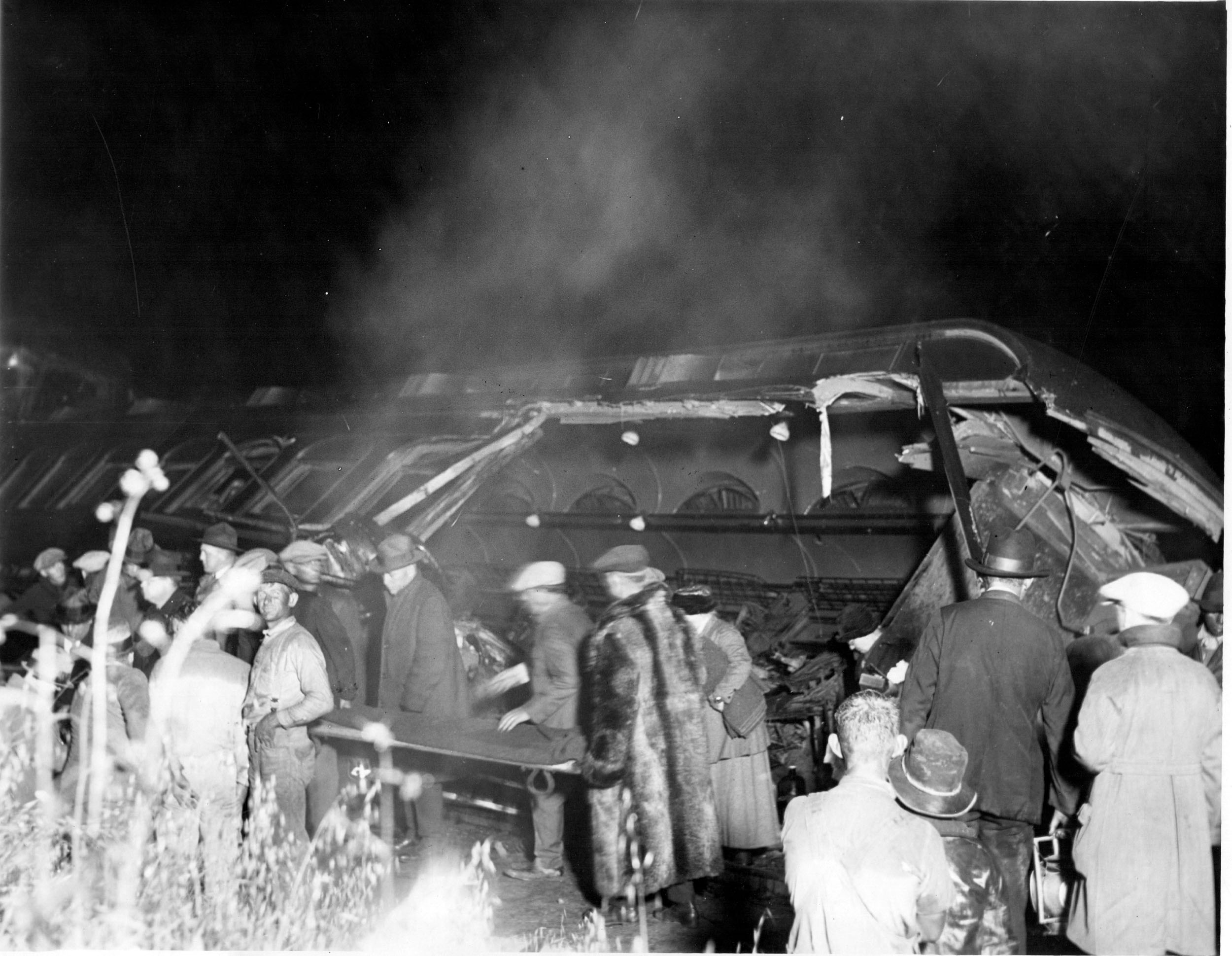
Because of what the reporter had said he looked for railroad guards who might be lurking about; he saw none that might give him trouble. Still, he would have to be careful. Watching the medical group march toward the railroad car, a plan popped into his head. He would masquerade as a doctor, mingle with the group and climb aboard unnoticed. A sumo wrestler would not have been spotted sooner. Six railroad guards jumped out of the night and barred his path to the coach; one, the spokesman, almost as large as Harry, requested Harry to leave.
“Beat it buddy,” he said, “you and your lousy camera.”
Although Harry explained his position as calmly as he could – he had proper credentials, served the public as well as the papers, had a right to shoot this disaster, and watch what you call my camera – the debate became heated, harsh words exchanged followed by curses and insults and pushes and shoves that led to a wrestling match – which ended in victory for Harry.
For Harry’s strength was as the strength of ten – six anyway – and when the train pulled out of the station he was among those present on the rear platform of the coach, one hand gripping a railing, the other holding his gear.
“They sure got back at me,” he said in reporting the dust-up later. “They entered the car, locked the door, and left me standing outside in the rain, the rascals.”
The rascals huddled inside; their gestures and angry looks suggested to Harry they were voicing unsound views on media rights and plotting to hinder his movements.
The train stopped, the guards jumped to the ground and disappeared in the darkness; probably to get reinforcements, thought Harry. He had better be on his toes.
He paused for a moment to take in the scene. The rain had dwindled, was now a drizzle; he’d be able to use his flash gun. But if not, if the magnesium powder would not ignite, there were bonfires spotted about; the site was very well lighted. He could see people moving about, some of them running ahead, obviously toward the wreckage. He started to disembark when he spotted the guards, double in number, moving his way in tight formation, all of them eyeing him, one of them pounding a fist in his hand. Harry’s initial thought was “forget maneuvers, go right at ’em, a fullback plunge up the middle.” It would have been fun, but there were too many out there; finesse was the key word here. He turned his back on the guards, stepped to the opposite side of the platform, dropped to the ground, then circled back unnoticed and, after a while, found the derailed engine, its nose buried deep in the mud. He positioned his camera and flash gun tray, set off an explosion and triggered the shutter, then moved to another location and readied the stuff again. And in this way – setting up, shooting, moving on before the flash could be tracked – he got a series of pictures.
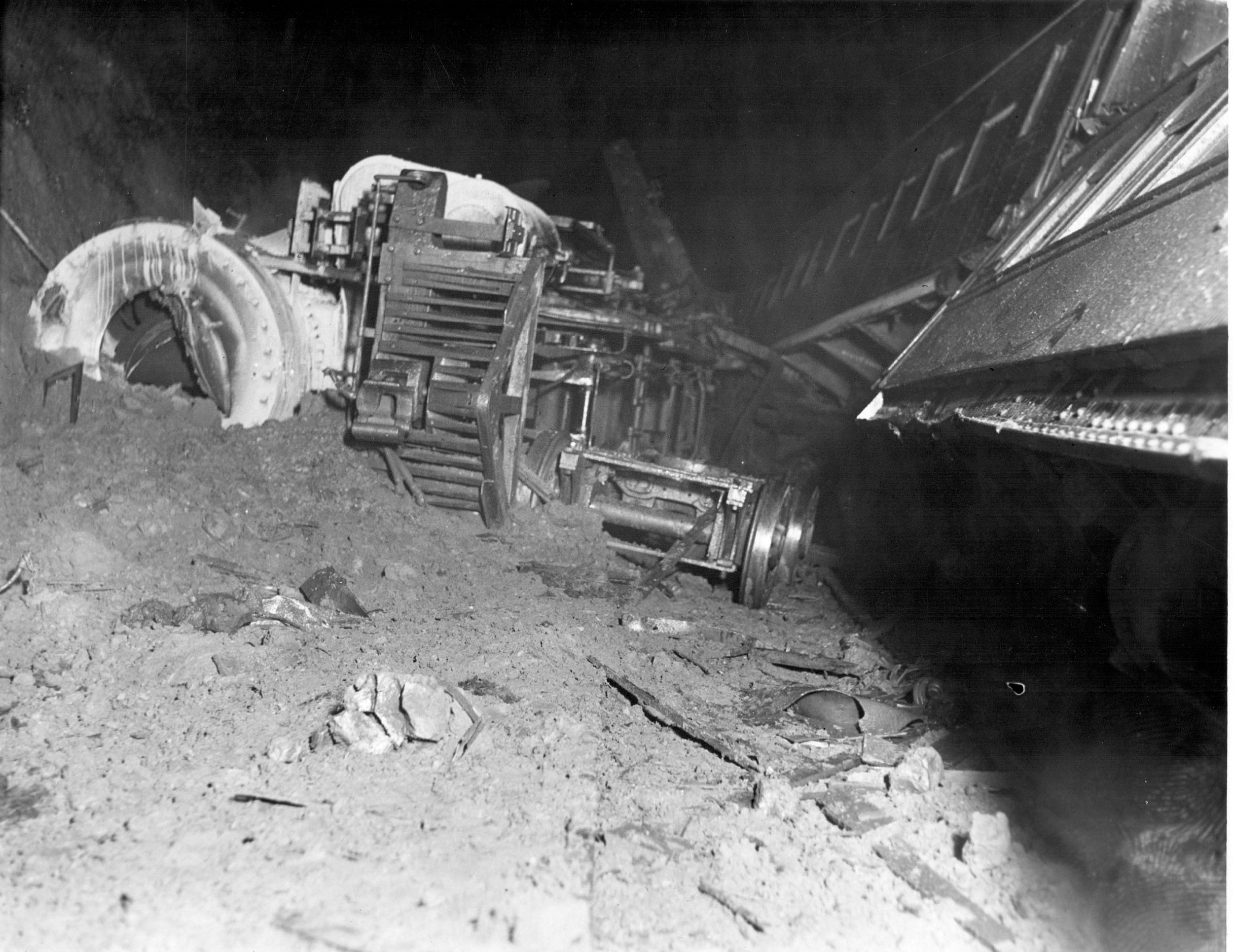
The guards never attacked in force. There was one confrontation when one stood in front of his camera as if to block the shot. Harry set off a flash gun explosion but did not expose the film, and the guard staggered off in the mud, thinking he had ruined a picture, but worried about his eyesight.
Harry, cold, soaked to the skin and spattered with mud but satisfied he had some very good shots, sneaked aboard the relief train being readied to leave for the city carrying seriously injured attended by doctors and nurses. He got off at Linda Vista, cranked up his automobile (the starter failed this time), drove to the newspaper plant and struggled up to the darkroom.
Streams of light were piercing the sky when he wound up the processing work and submitted his prints to the desk, but too late for the morning edition. Facing an impossible deadline – (word of the wreck was delayed by officials, and once on the scene reporters were harassed by trainmen) – the morning crew, by stretching the deadline, published a full account, a partial list of the injured and the name of the engineer killed; heroic efforts of doctors and nurses and of those who had come to the scene to aid the trapped and the injured; and futile attempts by trainmen to hamper newspaper coverage. All in all a worthy effort, Harry could honestly say. Too bad he missed the deadline; at least his pictures would make the later editions.
He took fifteen minutes for breakfast and reported back to the desk. The evening paper would use his pictures along with a full report that included some digs at the trainmen. The morning crew would take a breather then work on follow up stories to be published next day. Knowing daylight pictures were needed, Harry went back to the scene. Sleep would come later. Quite a bit later.
He drove his car on roads and paths still muddy but passable now and would get within a mile before he would have to walk. As he drove along he thought of the trainmen who had attempted to stop him last night, the poor misguided souls, and found that he could forgive them. They were working stiffs as he was, acting under orders and trying to do their jobs. He could even forgive the guys at the top, the ones who had called the shots. They had acted in haste and by now, having been taught a lesson, would see he was treated with proper respect.
He parked his car and walked the remaining distance along a path inside a wire fence bordering the railroad tracks. He was striding along, admiring a bright and cloudless sky – always that way after rain – when he saw advancing in his direction a sizeable body of trainmen. And it was much the same as before: “Get out of here with the camera, pal – this is private property.”
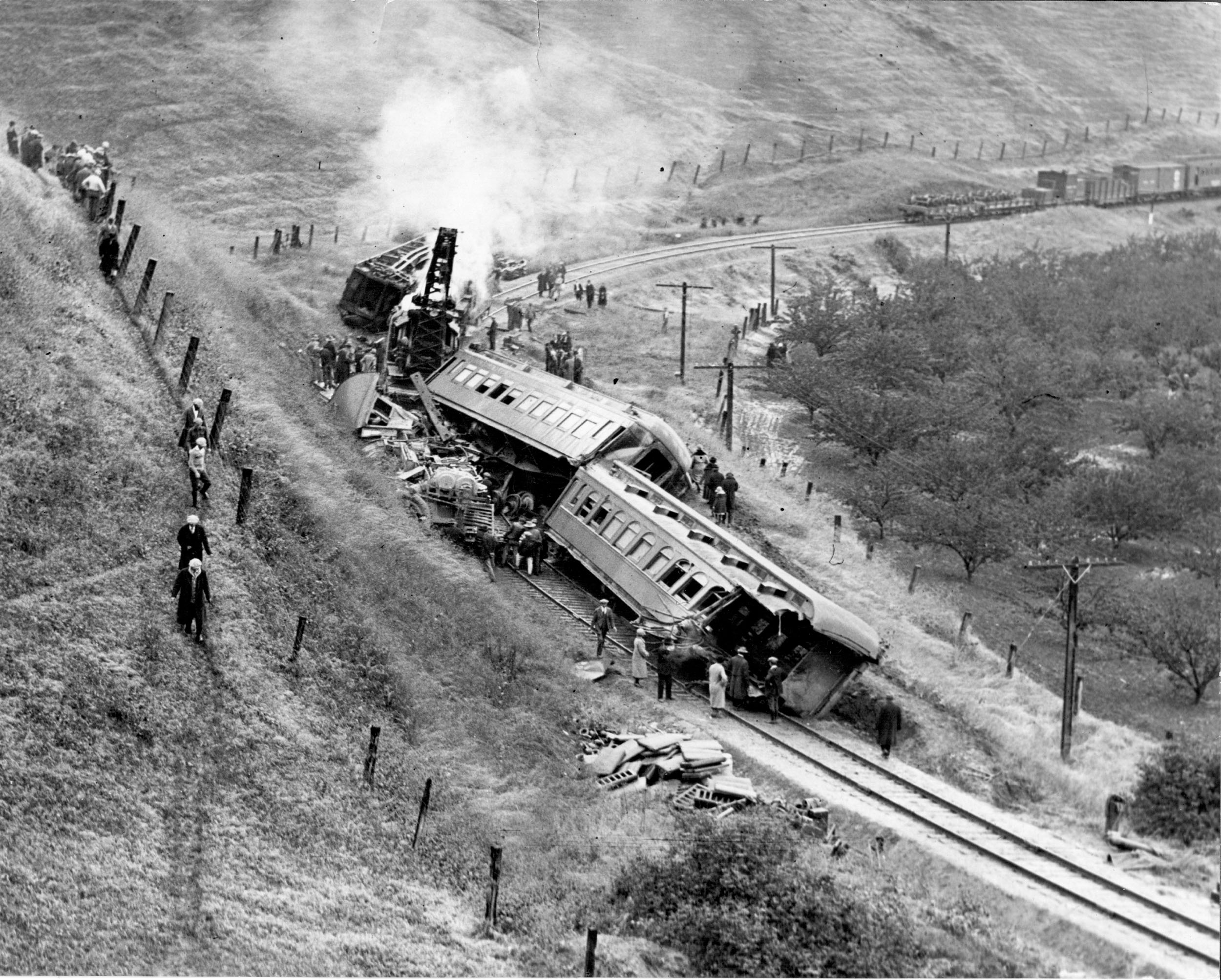
He didn’t bother to argue. Conditions were perfect for daylight shots and the wreckage was in a bed next to the railroad tracks and beneath the slope of a hill; there were any number of places at higher elevations on the other side of the fence where he could shoot his pictures and not be hounded by trainmen. He did not require closeups; he had shot them the night before.
He climbed the fence and walked along a path created by hundreds of viewers until he found the perfect place to get an overall shot. He triggered the camera a couple of times and knew he had a picture that words alone could not describe.
He went back to the plant and into the darkroom to handle the processing work and when he had finished two hours later, submitted his prints and went home. He was greeted by Grace who readied his bath and presented him one of her famous hot toddies – after she gave him a hug; she hadn’t seen him for thirty six hours.
He was back on the job early next day, rested and ready for current assignments, static though they were bound to be.
He’d reviewed presentations in both of the papers and graded each with an A. He was especially proud of the spread in the morning paper containing the follow-up stories. A bang up job by reporters. Though hassled and badgered by trainmen, they had presented the news to the public – and had nailed the railroad guys. The story was told in full:
The train’s engineer, having made an unscheduled stop at Sorrento, was fifteen minutes behind on the run, and in an effort to make up the time had pushed the engine into the curve at the foot of Sorrento grade quite a bit faster than usual. The engine had gone off the tracks to the right of the bed and had buried its nose in the mud; the coaches had followed along, had scraped the side of the engine and tumbled off to the other side leaving battered passengers trapped in overturned coaches. Engineer dead; thirty nine passengers injured. The reporters covered all bases. They told of heroic actions of doctors and nurses and trainmen who attended the injured in light provided solely by the bonfires they made; of passengers who’d survived unhurt and had crawled out of coach windows to help those still trapped; of motorists who’d stopped to give aid in any way that they could. A special pat on the back was given the right thinking citizen who’d called the newspaper after a four mile walk. Coverage included attempts by trainmen to hamper reporters, and in Harry’s opinion it was neatly done:
“Every effort to obtain the names of the injured was systematically blocked by employees of the railroad company who closely followed reporters and prevented them as far as possible from ascertaining the facts of the wreck or the identity of the injured or dead. . . .”
They backed the report with a statement made by a passenger who escaped from the wreckage unharmed and involved himself in the rescue. The man, a Catholic priest, deplored the actions of trainmen “whose first thought was to keep it all a secret instead of helping the injured.”
Gratifying to Harry. All in all a very good day. Coverage had been complete, reporters had had their say, and Harry had regained his spirit. Especially nice to be backed by a priest; it justified all their actions. As for the trainmen, those guys had been overmatched, had been led astray by their leaders, and he had nothing against them now that he had his pictures.
Harry, his outlook brighter, was ready to involve himself once again in the full tide of his daily routine. He leafed through the assignment slips left on his desk. Good possibilities there, he thought. He got his equipment and walked down the hall toward the stairs, his waddle more sprightly than ever. He even found it in his heart to forgive the silly deskman who’d looked for him at the movies instead of the darkroom where the guy should have known he’d be found.
To err is human, he told himself; the guy had sullied his image but by now he would have set things straight.
He was greeted in the hallway by a senior editor who smiled and patted him on the back and said he admired his pictures. He also praised the city desk for “getting you out of the movie.”
“Pretty good thinking,” he said, “flashing your name on the screen – don’t you think so, Harry?”
Harry went on his way in silence, but answering under his breath.