Though touched on in previous chapters, the crippling workload Harry endured through most of his lengthy career will now be fully explained. The workload was self inflicted. His editors, those you would have suspected of unduly cracking the whip, Harry absolved of blame. True, they endorsed his penchant for work and profited by his zeal, but they cannot be charged with the crime. Harry insisted they treated him with respect, rewarded him for his efforts, and made no excessive demands. In return he gave them his best.
The fact is Harry was running scared when he saddled himself with the burden. As a feckless youth he’d botched two previous jobs for which he was clearly unsuited, and having learned his lesson had selected a fitting vocation and had thoroughly mastered his craft and, reasoning that his talent plus fifteen hours a day would cement him in his position and ensure a lasting career, had opted for ceaseless toil. By the time he felt secure he was firmly entrenched in the habit and could not have backed off if he tried.
It might make sense at that. He had a rewarding career. His minor deceits and transgressions were generally overlooked, he was widely acclaimed in the business and frequently honored at home, and when he finally limped into the sunset it was with hardly a stain on his record. Still, there remained the suspicion that fifteen hours a day most every day of the week for a period of twenty eight years had all but polished him off a little before his time. Propped up in his hospital bed he begged to disagree: falling apart as he had done had nothing to do with the workload; it was something that happened, that’s all. In short, no use crying for Harry, he had the time of his life….
Maybe he did at that – at least compared to the shooters back East during the ’20s and ’30s, the time of the newspaper wars. Recruited for spirit and fire, given little if any training, they were the front line soldiers in the battle for circulation. They answered only to “word men” – editors and reporters – and if affable in a newsroom were terrors when loose on the street. Carrying their huge Speed Graphics (and starting in 1930, electronic big-bulb flash guns) they were easily identified as press photographers, given access to any event and routinely waved behind police lines. But if, as viewed by the public, they were intrusive, ill mannered creatures who would do anything for a picture, a case could be made there was cause, and the blame should be shared by the system. With no guild protection or guidance it was every man for himself in the fiercely competitive, low paying jobs. Broadway productions and Hollywood films (“Front Page” and “Five Star Final” among them) depicting newsmen in general as devious schemers and con men helped expand the image. Harry, in San Diego, a town one-quarter the size of a big city borough, had fewer problems by far. Still, not wishing to be lumped with the shooters back East (whose plight he viewed with compassion) he put on the velvet glove when bagging the prominent guest, especially the camera shy type. Thus, invasion of privacy rights was seldom a problem for Harry. A polite but firm approach, efficient use of the camera and most of those tapped for the honor complied with Harry’s instructions, which he delivered with tact.
That’s not to say he never encountered a problem….
* * *
One day in 1932 he stood on hard packed dirt just off the landing strip at the North Island Navy base, and though the sun was blistering hot he didn’t mind the wait; he needed time for the pain to subside – the pain of a twisted ankle. Gosh darn rabbit holes.
The man from the Navy Department, Ernest Lee Jahnke, his target that day, had just stepped off the plane and now was surrounded by local officials and Navy brass involved in the greetings and small talk required on such an occasion. He had dropped in for a ceremonial look at a construction site and an inspection tour of the base, and because the visit signaled the government’s intent to continue a building program despite the Great Depression, he was getting the royal treatment.
Harry, on the outskirts, thought he would wait for the ritual to end before he would order the set-up his editors had requested. He had photographed the man shortly after he’d got off the plane and before engulfed by the mob. The commandant of the 11th Naval District, wearing his Gilbert and Sullivan hat, had rushed to do the honors and Harry had fired a shot. Good enough for a backup, he told himself, that comic opera hat would be worth display alone. But why had the government guy scowled at him? Had he done something wrong? Something to do with protocol? Should he have waited for the 15-gun salute to end before he snapped the picture? Too late if that was the case. A pity the guy was upset; he’d shot him before and had always found him well mannered and obliging. His wife as well; he’d taken her picture the night before; a very gracious lady – and she looked OK in the picture. Well – might as well forget it. In a minute or so he’d crash the party, snap the picture and get back to the plant – and hope for a story to break.
It wouldn’t be much of a picture: big man from Washington looking at plans for the building; admiral looking on, secondary guys in the background. He shuddered. But what could he do? Just set the right exposure, get the group in focus, and shoot the lousy picture. Better at least than a yearbook shot – blank eyed guys standing in line and staring at the camera – but not by much.
He saw an opening and speaking in a firm but respectful voice began to assign the players their roles. The members of the supporting cast, sensible locals, including the admiral – he’d snapped them all before – began to take their places, but the star of the show stood fast, his cold gray eyes on Harry, his face an ominous mask, and when he spoke it was with the booming voice of authority. “Never mind the foolishness. Just take your picture and we’ll get on with our business. . . .”
Harry suspected – perhaps unfairly – that any “business” that followed would be conducted in the officer’s mess while sipping some pretty good booze. Still, he was careful to respond in a respectful tone of voice though he upped the volume a notch to make sure he was understood. “I prefer to take the picture the way my editors want it,” he said. “It will only take a minute, so if you’ll kindly stand over there – “
The official gestured impatiently, shook his head, and keeping his cold eye on Harry, issued his final order: “We’re all lined up; take your picture now or forget it.”
Harry’s tough protective crust had sheltered him from violence, death and disaster – a newsman’s stock in trade – for too long a time to be bothered by ill mannered bluster, and he politely invited “any gentlemen who would rather not be in the picture” to “kindly step aside,” then met the gentleman’s angry glare with wide, unblinking eyes. The stare down was brief, and the gruff admonition that followed – “okay; take your picture the way you want, but step on it” – fooled no one in the crowd, and Harry’s victory was complete.
“I overpowered him mentally,” he later explained.
* * *
One day in 1925 Jack Dempsey, the heavyweight boxing champion, and movie starlet Estelle Taylor slipped into San Diego hoping to marry secretly in a local church two months in advance of the date he’d announced in the papers. He had probably figured that in a smaller city the press would be less alert and he and Estelle could avoid the hassle and hoopla bound to accompany a public marriage.
He had won the heavyweight championship in 1921, with or without a loaded glove (the issue has long been debated), had defended it a couple of times, and then in the absence of qualified contenders (white contenders, that is; Harry Wills and other blacks were never given the chance) had signed with a movie production company in Hollywood to star in adventure films.
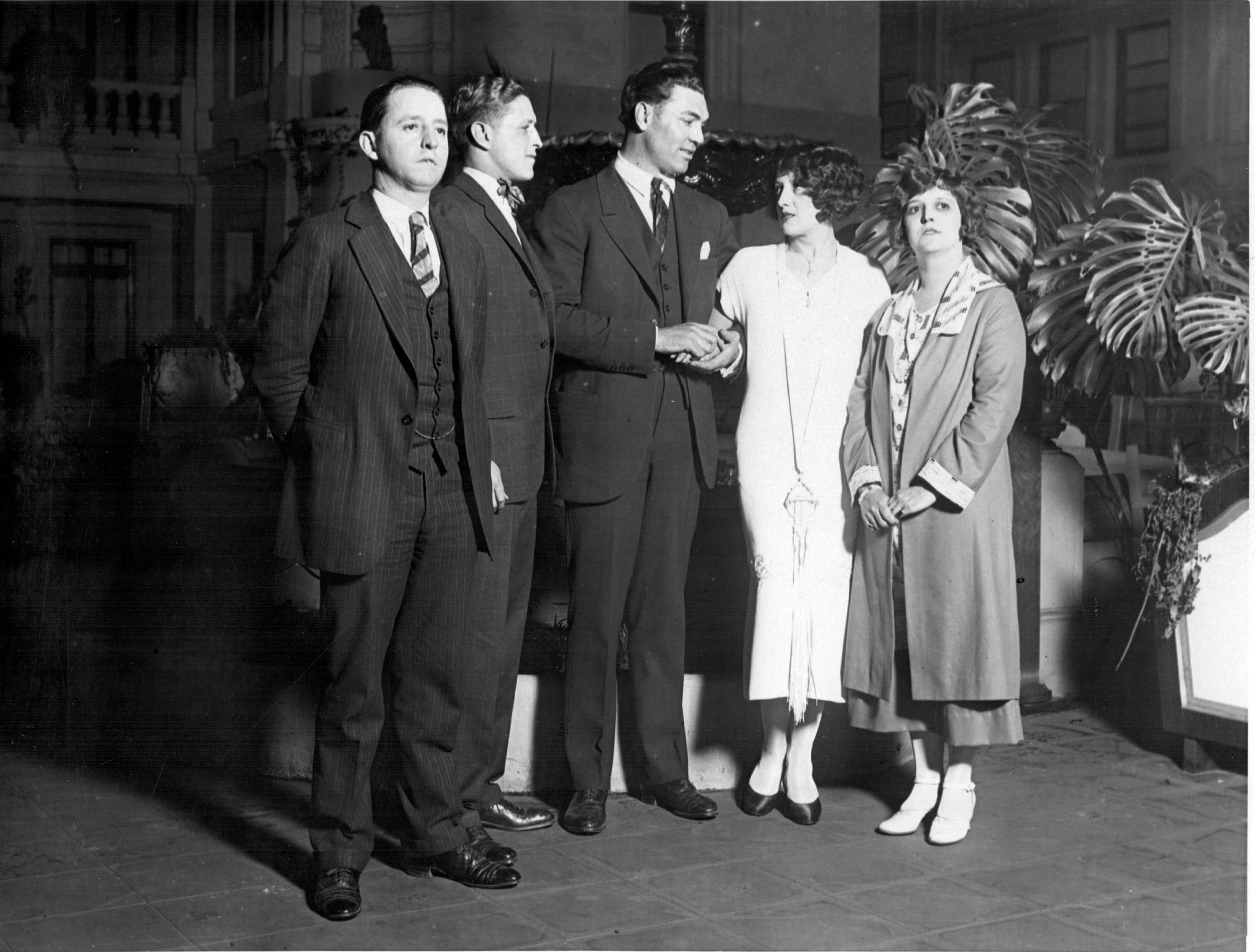
Local reporters knew he was in town to help coach a lightweight fighter in a match at the Coliseum Athletic Club – something he’d done before – but when it was learned his bride-to-be had accompanied him, they doubled their watch, and when Jack and Estelle sneaked into the county courthouse on a Saturday (February 7, 1925) and applied for a marriage license, a reporter was on hand to greet them.
In the Page One story in the evening paper that day, he said the marriage would have to wait until Monday or later, since he and Estelle planned a visit to the Aqua Caliente race track in Baja California that afternoon. The morning paper’s reporters, a little less gullible than Dempsey might have thought, crashed the private marriage ceremony that night in the office of the First Presbyterian Church and in the story next morning politely ignored the champ’s quaint attempt to deceive them.
The display was worthy a of champion: picture by C.C. McCafferty of the happy couple on the courthouse steps and complete story starting on Page One. The champ may have been surprised to get the extensive coverage he’d sought to avoid, but cornered by the press he was friendly and gracious as ever. He posed for a picture and stood up to the grilling, mindful perhaps, that it was newsmen who saved his title by throwing him back in the ring during his fight with Firpo. But enough was enough, even for Dempsey, and he later sent a couple of huskies to make clear that the wedding reception to be held that night was for invited guests only. No reporters, no photographers.
This was acceptable to the two city desks; they had the beat on the story, had covered it fully; could afford to be condescending. Let the happy couple enjoy the wedding reception in private. This was O.K. with Harry, not because he was shy – he would risk a punch in the nose for a picture any day in the week, but if the papers chose to skip the event who was he to intrude? Since he was well caught up in the darkroom and had no assignments tonight he would take his wife to the movies; Grace deserved a break and he knew the movie she would like: Rin Tin Tin the Wonder Dog playing at the Plaza Theater. Boy, would she be surprised.
But when P and A Photos, a nationwide service that paid Harry for use of his pictures, asked him to cover the party and hinted it might mean a bonus, he was forced to rethink his decision. P and A had no call on his time and Harry could go either way; take his long suffering wife to the movies or crash the wedding reception. The choice was Harry’s to make….
He was met at the door by a middleweight clad in a custom made suit (made while still a welterweight, if Harry was any judge), and a heavyweight with the slope to his shoulders that warned of a dangerous puncher. They reminded him politely that this was a private party to which he had not been invited and therefore should consider departing before he was tossed out the door. But when Harry stood his ground, citing his newspaper rights, they said they would check with Jack. Stay right here, they cautioned and when Harry said he would, they shuffled off toward Jack who stood in a corner chatting with some of the guests.
Standing inside the door Harry assessed the crowd: well mannered, respectable people, including Dempsey’s parents and a couple of San Diegans he could probably enlist for support. He saw the two-man reception committee pull the champ aside and whisper in his ear, no doubt reporting the social blunder and offering an option or two – he could guess the one they preferred.
Jack listened attentively, glanced his way, then approached in the slow, easy walk of the professional athlete, his face expressionless, his dark eyes on Harry but giving no clue to his thoughts. Harry waddled forward, left hand holding his camera, right hand fully extended, ready with a greeting contrived to reach the heart of a man known to have strong family ties.
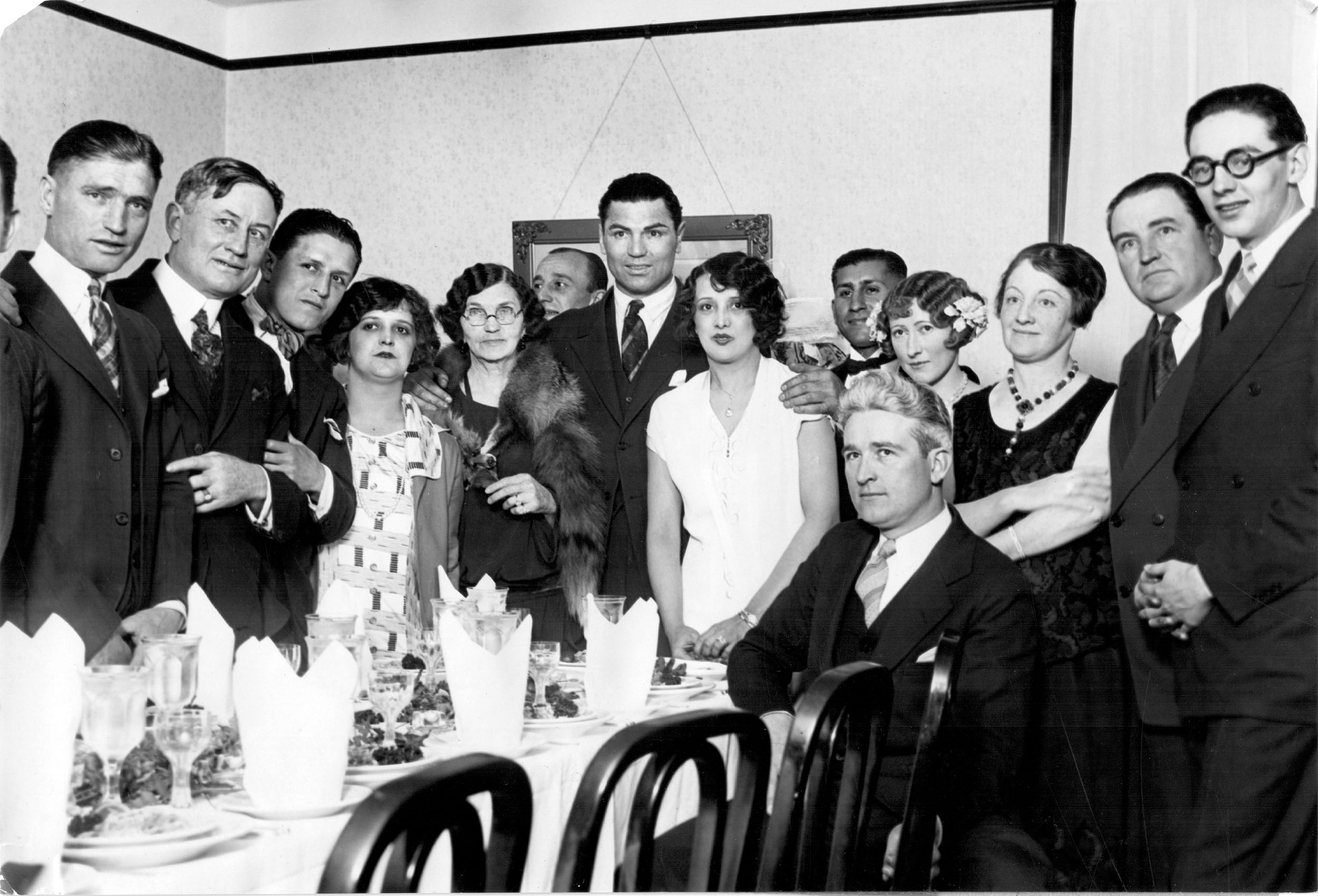
“A great honor to see you again Mr. Dempsey. Thought you might like some pictures of the wedding party – for your Mom’s scrapbook.”
There was no change in the champ’s expression, and Harry could not determine at once if the flimflam had worked, but after a slight hesitation, Mr. Dempsey offered his hand and said in his high pitched voice, “Sure, not a bad idea – take whatever you want.”
Harry, realizing he’d been walking a tightrope in proposing a cheap, scrubby deal – a picture for publication and a copy for Dempsey is what it amounted to – now felt sheepish. The champ had not been fooled. It seemed apparent to Harry the man who annihilated people in the ring was a nice guy out of it.
Dempsey, his new wife, and all the people in the wedding party – including the two who had checked his standing with Jack – were “just as gracious as they could be,” Harry said afterwards. “They even invited me to join the party after I took the pictures.” As for the champ himself, known for his viciousness inside the ring, Harry found him to be polite and well mannered, impeccably dressed and showing no signs of his trade. He attributed the absence of scar tissue over Dempsey’s eyes and the almost classic nose to the plastic surgeons in Hollywood where he played the role of “Daredevil Jack” in a 15-part series for Pathe’ Studios. Quite obviously, the man who had lived the life of a hobo forced to ride on freight train rods early in his career had made great strides in manner and appearance.
Harry set up his camera and flash powder tray and got the pictures he wanted; chatted a bit with some in the crowd, shook hands once again with the champ, promised to send him the copy photos, then quietly slipped out the door.
“A real gentleman,” Harry said later. “I was sorry when he got clobbered by Tunney.”1In 1926, Dempsey lost his title to Gene Tunney, and famously explained it to Estelle afterwards: “Honey, I forgot to duck.”
* * *
One night in January, 1921, Aimee Semple McPherson, a lady evangelist, 30 years old with a couple of kids, a broken down car and a mom in charge of collections, climbed through the ropes of the boxing ring at Dreamland Arena at First and A, San Diego, and was introduced to the fight crowd which showed its respect with gentle applause and only a whistle or two. But when she announced she would preach from the ring during revival meetings to be conducted in Dreamland Arena, the crowd reverted to form and became a howling mob. Sturdy and robust but not unattractive, she stood in the ring, wonderfully poised, a saintly smile on her face, till the hoots and the hollers diminished. Then in pantomime of a boxer she pummeled the air with her fists as if knocking the stuffing out of sinners, and joked with loudmouths at ringside, suggesting they come to the meetings “and bring fellow sinners as well.” This spunky display of good will soon won over the crowd.
Harry was there that night and was very impressed by the lady and though he skipped the subsequent meetings he skimmed all the stories about them and almost believed what he read: people were cured of their ills while praying with Mrs. McPherson. She would pray for the afflicted who came to the stage and they would announce they were cured. The blind would suddenly see and the lame would discard their crutches and run down the aisle shouting “Hallelujah!”
Though during her years on the circuit she had focused on preaching the Gospel (adding a touch of theatrics to get the message across) it was her faith healing sessions that drew in the crowds, not her theatrical sermons. This fact was noticed by Mom who suggested that San Diego, which, because of its wonderful climate had more than its share of afflicted, might be a very good market. As it turned out Mom was right. While Mrs. McPherson did nothing in San Diego she hadn’t done anywhere else, she got a better response. Though she never said she could heal (“I can only pray for you and ask that health be restored”) the healing miracles claimed in her name became the talk of the town. Attendance picked up and the series was extended a week. When crowds became even larger the series was extended again. The Organ Pavilion in Balboa Park was engaged for a meeting on February 2, 1921, and during her pitch to an overflow crowd a woman rose from her wheelchair and stumbled toward the stage. Others, sick and ailing, many with crutches and canes, made their way to the platform begging to be cured of their ills. All but engulfed by the crowd, she responded as best she could, healing them one at a time until completely exhausted and forced to give way to second stringers standing by – local pastors and preachers. More than 100 were said to be cured. But many others were left unattended, and so another meeting was set, again in Balboa Park, and the crowd was bigger than ever, 8,000 or so, the newspapers said. (Biographers later tripled the number.) Once again many people claimed to be cured – more than 300, the newspapers said.
After sharing the take with sponsors Aimee went home to L.A. and started to build a temple in a place called Echo Park and founded the Foursquare Church. She later attributed her rise to fame and fortune to the sessions in San Diego.
Now seven years later Harry, who had followed the lady’s career, was less enchanted, even disgusted with Aimee Semple McPherson. Charged with immoral behavior (the charges were later dropped), her scamper to sainthood had floundered, and rightly so, thought Harry, who once played chimes for his church. And so when he met her outside the Coronado Hotel November 3, 1927, it was with an open mind that he planned his picture. If the harsh sunlight showed her wrinkles or blanked out her face, if her thick ankles could not be hidden beneath her flowing skirt, why that was the way it would be. Harry was reluctant to make judgments regarding a person’s personal life, but if what they were saying about Mrs. McPherson was true – he was foursquare against her.
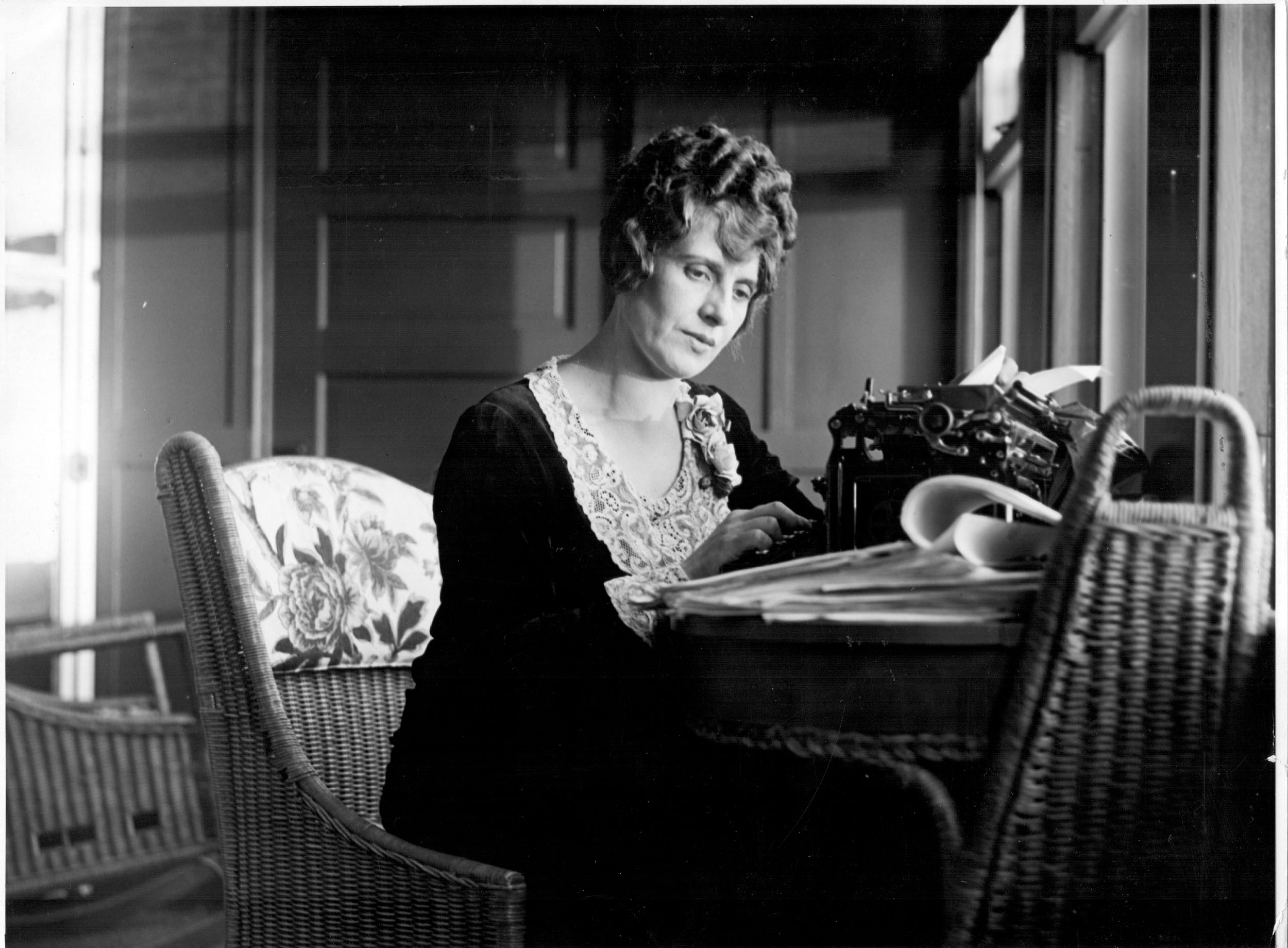
He introduced himself and asked if he could take her picture. The husky voice that told him “of course you can, I’d be hurt if you hadn’t asked,” was refined but packed with emotion, and when, after he had photographed her standing beside her car, she suggested a picture in her hotel room seated at her desk and typing her sermon, – one that would “correct the terrible misinformation being published about me since the kidnaping,” – Harry was quick to accept.
She was 37 or so and hardly the creature of beauty her handout pictures implied, but the husky voice and the hypnotic charm that had won her tremendous following became apparent in the confines of the room, and he had to remind himself of the heavy evidence supporting allegations that the “kidnaping” was nothing more than a cover story for an extended vacation she had arranged with a male member of her staff. Her conversation was pleasant, her laughter appealing and her manner gracious as they discussed the photo setup that “would suit us best.” But when Harry found himself – for the first time in his career – listening to a photo subject evaluating the pose, the props and even the lighting, he felt he was losing control. And when she suggested “let’s just use the natural light instead of the flash powder” he was certain that was the case.
“We’ll just pull up the shades and let the sunlight filter through the curtains,” she said. “So much easier for you, don’t you think?”
Sure it was – he wouldn’t have to fool around with exploding the stuff in the tray – but making things easier for him wasn’t the reason she pushed for natural light. She must have known a flash explosion might highlight the wrinkles, whereas soft, natural light filtering through the curtain at that time of day would be kinder to her face. A savvy gal, Aimee. She had sized him up for a professional, expert enough to make the proper exposure, risky as it was. He would have to use the tripod and she would have to freeze for a longer time than usual. Tricky business – shooting a picture in a hotel room using natural light – but it certainly could be done. He knew he’d been manipulated but how could he argue? After all, his mission was to get the best possible picture for the paper and this was the way to do it. He took the picture twice, thanked her for her “cooperation” and agreed to send her the copy prints she had requested saying “if the pictures turn out well, as I’m sure they will.”
When he left the room it was with first hand knowledge of the famous evangelists’ magnetic personality and her gracious style and manner. He would watch her career with interest. But next time she dropped into town he would send someone else to take her picture.
* * *
Madame Ernestine Schumann-Heink, for many years a distinguished opera star, had retired and was living in Coronado across the bay from San Diego when Harry met her in 1925. At 64, her voice was said to have “lost little if any of its richness and vitality” after 47 years in opera, on concert stages, and in Army camps singing “for the boys” during World War I.
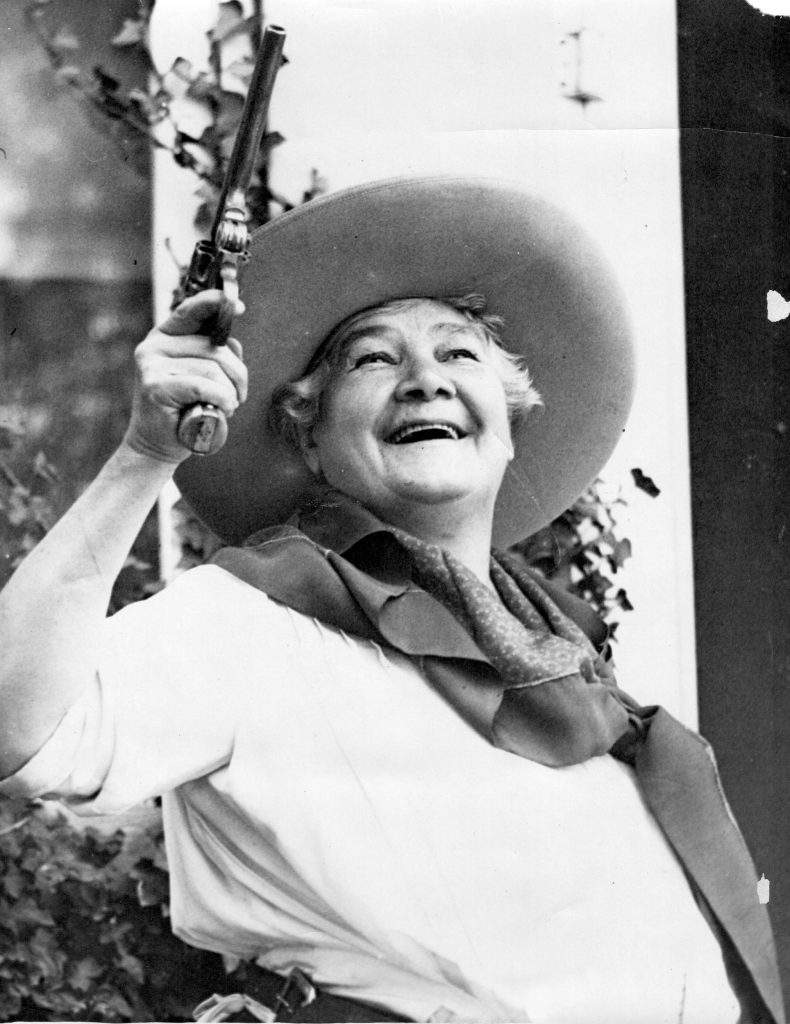
She was still accepting invitations to sing at benefits for charitable organizations and at conventions for war veterans, and when Harry learned she was going to appear at a rodeo in Colorado Springs sponsored by the American Legion he called her and asked if she would pose in a cowboy hat, possibly waving a gun. Of course she would, she’d be delighted, she said, “anything for the boys.” He bought a large cowboy hat at a novelty shop, called a Coronado police officer he knew and invited him to go along. On the way to pick him up he thought of ways to talk him into allowing the Madame to hold the gun in the setup he had in mind, which didn’t include the officer.
“We had a lot of fun,” Harry said later. “She was such a charming person, so gracious and thoughtful. She worried about handling the gun but the cop put her at ease. He made sure it was safe, then swore her in as a deputy and gave her permission to shoot me if I didn’t get a good picture. She liked the corny byplay and I got the picture I wanted – Madame Schumann-Heink in a cowboy hat waving a gun. That was hot stuff back in 1925.”
The newsman and the officer thanked her and started to leave, but she said “just a minute boys – I have something for you” and brought out three delicate, obviously expensive glasses and a bottle of what turned out to be very fine imported whiskey. The lawman, known for his dedication to duty, and Harry, a “root beer and buttermilk man,” put aside their shaky allegiance to the Eighteenth Amendment and responded as gentlemen would.
“If the greatest singer in the world – and for our money a most charming lady – desired our company for a bit of social drinking, that was good enough for us,” said Harry. It was a pleasant conversation, he remembered, and “our glasses were seldom empty.” It wasn’t the booze the Madame was interested in – she barely touched her drink – it was the conversation with a couple of working stiffs, Harry decided, and he loved her for it.
Once, he knocked aside a cloth napkin while reaching for his glass and found, to Madame’s embarrassment, a coffee stain on her beautifully laced table cloth. Evidence of the homey trait endeared the old girl to Harry all the more. “I’d seen my wife do the same thing at home,” he said.
The social hour finally ended and Harry and the policeman went on their way, reasonably sober and better men for having met the lady. And richer by far in very fine illegally imported booze, a bottle for each. “She insisted,” said Harry, who placed his bottle in the pantry at home along with others forced on him through the years and kept only for adding zest to the hot toddies and puddings for which his wife was famous. The policeman wasn’t as careful with his bottle of whiskey. He allowed it to slip from beneath his coat and shatter on the pavement in front of the police station and several officers including the one he answered to. As the fine imported whiskey trickled down the gutter he could only mutter: “Evidence.”