While Harry liked to think his pictures helped – and maybe they did – it was World War II and the booming aviation industry that sparked the growth of the city.
With that growth, and the New Deal legislation of the 1930s that led to acceptance of the long awaited 40-hour week, came expansion of the newspapers so that by 1946 Harry’s department was packed with happy photographers in numbers he never dreamed possible, and Grace, who had never complained about the extra hours that Harry worked, the restricted social life, the canceled holidays and interrupted vacations, or the messages flashed on a movie screen calling him back to work, now suggested a more structured existence at the work place and an outing in the country now and then. Harry, once the shock wore off, agreed.
“Tomorrow,” he said, “we’ll go on an outing tomorrow; we’ll pack a picnic lunch, hop in the buggy and take a drive along the coast.”
Harry had paid little attention to the efforts by newsmen in the East in the 1930s to organize a guild under New Deal legislation. He’d known that times were tough, newspapers were going under, and salaries had been sliced to what they’d been when he was a reporter in 1915 – $18 a week. He’d suspected at the time that the depression was making realists of those who had signed on for the glamour and thrills without regard to pay, only to find that serving at the pleasure of certain kinds of management was a scary proposition when times were bad. They were learning there was something to be said for a movement that sought a reasonable salary and strove for job protection.
The labor contract signed in 1937 by the San Diego Chapter of the American Newspaper Guild and the publishers of the city’s three daily newspapers exempted executives, department heads, and others in the management hierarchy, an elevated class anchored by Harry who didn’t look or act like he belonged.
Hired in 1921 as chief photographer, advanced to head of the photo department in 1926, he was never asked to restrict himself to a five-day, 40-hour week. He wouldn’t have known how to handle one anyway. He respected the rights and benefits the guild obtained for newsman but was far too set in his ways to accept them for himself.
From the beginning, Harry’s approach was basic: master the job, get totally involved, work when work was to be done, whatever the time of day, get the picture for the paper and sell what you can on the outside. He’d learned his lesson in 1916 when as a reporter for the San Diego Sun he began moonlighting as a cabaret musician instead of improving his limited writing skills and earned his outright release.
But now it was obvious – even to Harry – that with all the help he had he could slow the pace, share the duties, and spend more time with Grace and their friends. An outing in the country would be the way to start, and he even considered – for one fleeting moment – leaving his camera behind. A foolish thought, quickly discarded. He’d be Wyatt Earp without his six gun watching the Clancys approach. Never go out completely unarmed, that was his code; always be ready, something might break. He’d go on this outing with Grace – but he’d take his camera along.
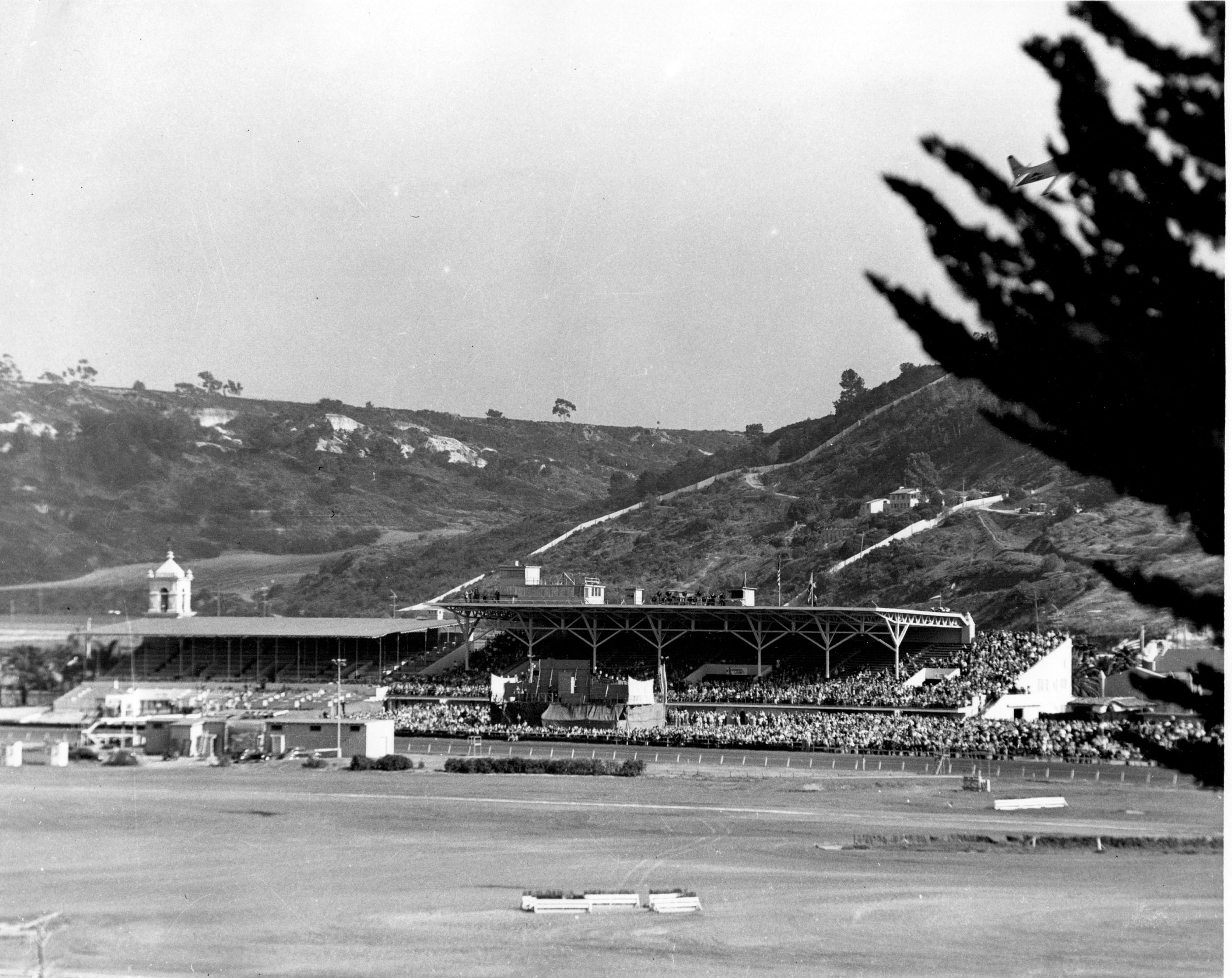
He knew just the route for an auto tour of the countryside: the beautiful tree-lined drive through Torrey Pines, along the coast to Del Mar. He suggested this to Grace; if she wished, they could drop in on the County Fair and while enjoying their picnic lunch, watch the exciting air show scheduled for later that day.
Grace rolled her eyes and emitted a sigh – an indication to Harry she knew what he was thinking – maybe a plane will crash – and he found it somewhat annoying. It wasn’t as if he wanted a plane to crash so he could get a picture. On the other hand, go to an air show and you never know what might happen.
“Believe me Grace,” he said. “I’m not going to cover the air show. I’ve assigned two perfectly capable guys and they will cover whatever comes up.”
“I’m sure they will, Harry.” she said. “But you had better take your camera along just in case.”
“The camera will be in the car,” he said, “I’ll lock it in the trunk.” But he was talking to a wife who knew him better than he knew himself.
“That poor old camera, locked in the trunk? Don’t be silly, Harry.” She laughed and patted his arm and he chuckled in nervous relief.
“Of course,” he said – attempting to be thoroughly honest – “there is always the chance of a crash, but the guys I’ve assigned are very good men. They’ll cover whatever comes up.”
After a pause he added: “Probably, we won’t be there when it starts.” He regretted it as soon as the words were out. That’s pouring it on, he thought; better shut up for a while.
It was a very pleasant outing, a leisurely drive in the country under a cloudless sky. Grace enjoyed it – even when she saw him look at his watch and guessed correctly that their arrival at the fairgrounds would coincide with the start of the air show.
He drove to the north side of the fairgrounds away from the main body of viewers in the grandstand to the west, and parked his car near a tree shaded area “so that we can sit on the grass and have our lunch.” He carried the picnic basket in one hand, and in his other he carried the relic he innocently called “Old Betsy.” She noticed, of course, and when they were settled she smiled and continued to play the game.
“Seems like a perfect place to take pictures,” she said with a smile as the planes took off, “in case something happens up there.” He followed her glance, pretended surprise, and said, “Oh? Well you could be right.”
Boldly now – the cat was out of the bag – he picked up his camera, adjusted the huge telephoto lens and cranked up the focal plane shutter.
“It wouldn’t hurt to be ready to back up the boys – like you said – just in case.”
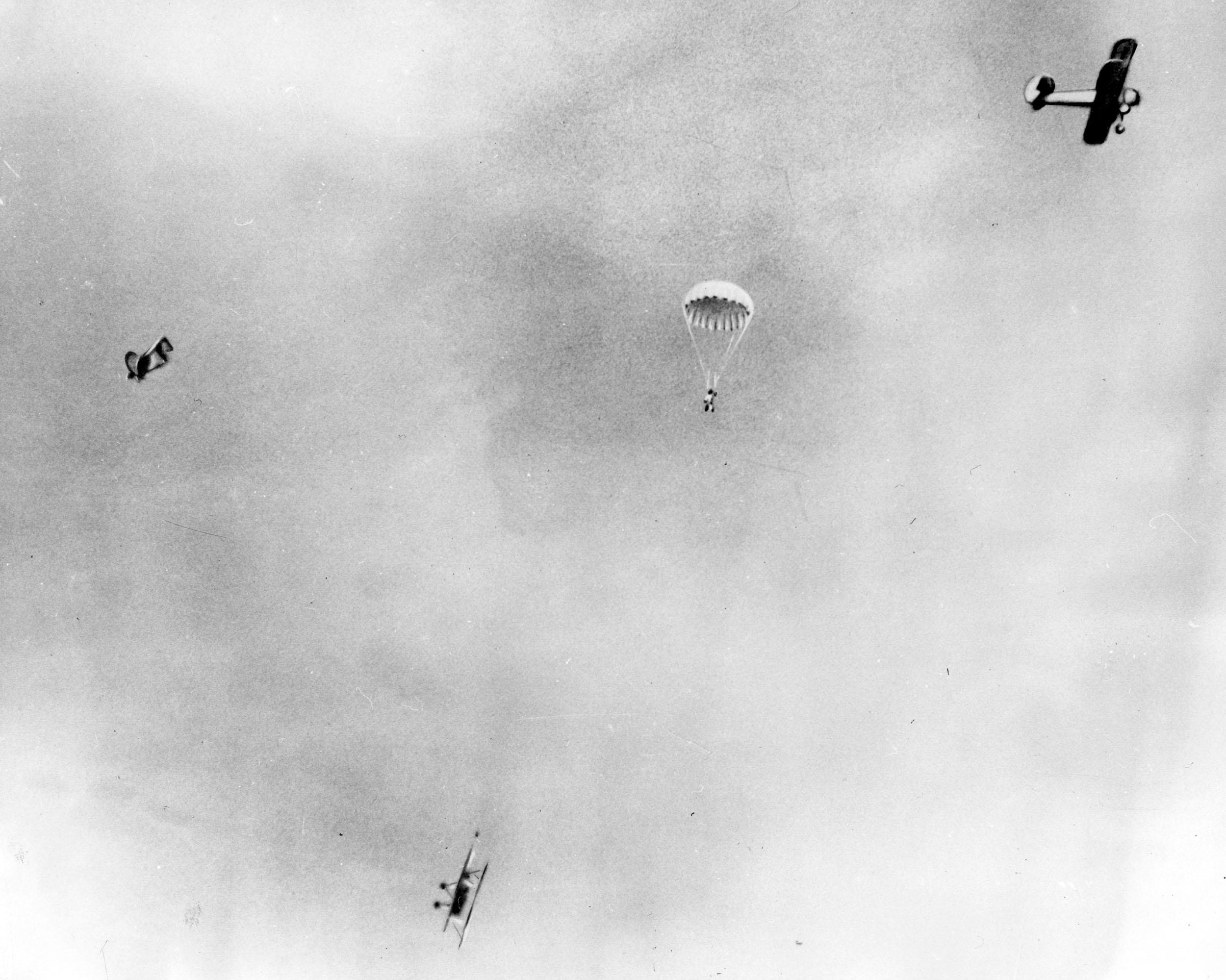
The nice thing about the collision was that neither pilot was hurt, and the scene stayed locked in his mind: two planes high in the sky, one to the left, one to the right, engines humming; they bank in unison, straighten out, roar defiance and charge each other on course to meet at the grandstand. Engines out-blasting the shrieks of the crowd, they miss each other by inches, fly on and bank in the sky and here they come again. This time a signal is missed or someone takes too much of a gamble; one of the planes slices the tail off the other and continues to fly unabated; a figure come hurtling out of a plunging part of the plane and a parachute blossoms and hangs in the sky, and Harry, one foot on a picnic plate, triggers his faithful old camera.
One shot, one negative, on it one airplane, two parts of another, and a survivor hanging beneath a white silk canopy outlined against the sky.
* * *
He worked for the papers four more years until 1950, then retired because of ill health. When he recovered, he accepted freelance assignments until he broke an ankle taking pictures aboard a Navy ship in 1956.
He worked in his photo lab at home under contract with the Union-Tribune Publishing Company making prints for sale to the public, a job a he truly enjoyed.
“I hope I live forever, doing this,” he said. Two months later – in August 1963 – Harry died of cancer, one month after the death of Grace.
His pictures pop up from time to time in various publications, but he is seldom if ever credited. He won’t be forgotten, however. The San Diego Historical Society has taken on the task of collecting and saving his pictures.