He hurried south on Union Street from the trolley stop on Broadway, folding Kodak slung from a shoulder, pockets stuffed with film packs. Foolish he knew, rushing like this, he had plenty of time, when he got there he would just have to wait. But Harry was pumped, he couldn’t slow down, could hardly keep from running. This was the day of the free flight, his chance to get aerial pictures.
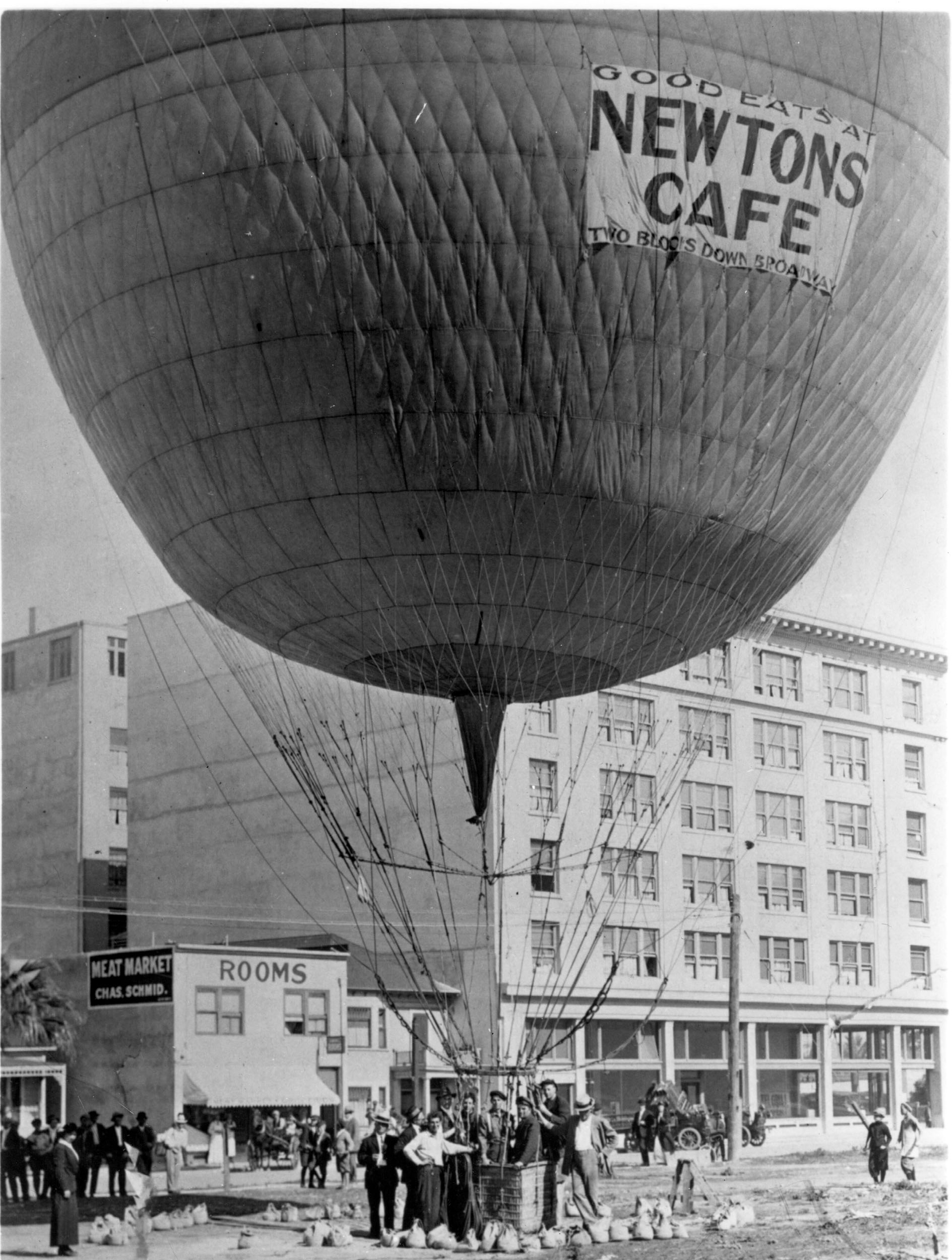
The big balloon, moored at a lot at Union and E, strained at lines to the passenger car, a wicker basket four feet square, loaded with sand bags and staked to the ground. While its presence there raised an eyebrow or two at the courthouse across the street, to the entrepreneurs who hawked the rides, the location could not have been better: close to the center of town, street car stop nearby, easy access for prospects, and not a penny for rent.
It was eight o’clock in the morning; the rising sun had brightened the sky but there was still a nip in the air. As Harry approached he saw near the rig a slender young man who was shaking his arms and shuffling his feet in what looked like a soft shoe dance. Jack O’Connell’s younger brother, on guard at the site and apparently chilled to the bone. He greeted Harry with a sigh of relief, said he was glad to see him; he’d been up all night with “this darn old balloon” and could sure use a cup of hot coffee. Would Harry stand by while he ran over to Newton’s? It wouldn’t take long. Jack was there having breakfast; they would probably come back together. Harry said sure, tell him I’m here – and bring back a couple of doughnuts.
Harry sat on the rim of the basket and thought about checking his camera. He had checked it early that morning but what the heck, he might as well check it again. A simple procedure: snap open the back of the camera; it drops and becomes the baseboard; the hinges should hold it securely; lens should glide out on the tracks while the bellows behind it unfold. Check out the focusing lens by racking it backward and forward. The shutter should make a nice, solid click, and the lens, of course, should be spotless. Nice little camera, his Kodak; he kept it in good working order. He inserted a roll of film, closed the camera and put it back in its case. Take it easy today, he reminded himself. Make every shot count. Try to get pictures to sell. For he desperately needed the money. And after his latest setback he needed a boost in morale.
He blamed himself for the break-up. He hadn’t been ready to manage a band; he admitted as much to the others. Forget it, they said, no one’s to blame, it hadn’t worked out, that’s all. They patted his back and wished him well and went their separate ways. But it hadn’t lessened the pain. He knew he’d let them down. Hadn’t got proper engagements. Just dinky little one night stands that barely paid expenses. And not too many of those.
* * *
The trouble with Harry back in those days, he wanted instant success, acted on instinct rather than reason. When he spotted an opening he would go with his hunch rather than think it through. Though capable of logical thought, when logical thought collided with instinct, instinct was sure to prevail. How else to explain the series of setbacks since his arrival in town? He had dropped out of school, flunked a job as a reporter, botched his teen-age marriage, and managed his band to the break-up. And he had yet to determine his system was flawed. Help was on the way in the form of a sensible woman – but not in time to save him from yet another disaster.
The band he had started with was happy to have him back but only for part time work and though he had time for the camera the cost of film was a factor: he had suddenly found it expensive. He would have to be more selective; less indiscriminate shooting.
One day he happened upon an aircraft designer at work on a plane he was putting together in a shed behind his house. A nifty little plane; looked as if it could fly. Harry suggested a picture and mentioned a modest fee. The man said yes. He put on a helmet and goggles, jumped in the cockpit and told Harry to fire away.
When Harry saw the print, pilot in front, empty cockpit behind, he pictured himself in the cockpit shooting aerial pictures. He shared his idea with the photo shop owner who processed his film and sold him supplies.
The market for aerial pictures, the photo shop owner said, was still some years away, but Harry was right in his thinking; if he got started now he was sure to be in on the ground floor when aerials were more in demand. At which time he would need new equipment.
Harry was happy to hear his judgement endorsed by an expert. There was one thing in his favor: there wouldn’t be competition. An Army colonel was shooting from planes but only on behalf of the Army; the professional shooters he knew were content to stay on the ground. And this was the place to be.
It certainly was. More than Harry knew. The Curtiss flying school had opened in 1911 and now in 1915 was in full operation, teaching servicemen to fly. The Army and Navy, aware of increasing involvement of aircraft in the ongoing war in Europe, and the sale of planes by the Wrights and Curtiss to the foreign powers involved, were sending men to the flight school in ever increasing numbers and planes could be seen in the sky every single day of the year.
Airplane builder Glenn Curtiss, of Hammondsport, New York, innovative designer, daredevil pilot, first to land a plane on a ship, first with a practical flying boat (but second to Henri Fabre of France in getting one off the water), had established a winter base at North Island on a rent free site, courtesy of John D. Spreckles, a local business tycoon, to test his daring new “hydroaeroplane,” a standard aircraft he’d equipped with pontoons hoping to interest the Navy. His flight training school, collateral to his primary program – building and selling aircraft – produced many of the pilots who would play key roles in the advancement of aviation and in the war that was just ahead. The interest created by Curtiss, the air shows across the bay, and the desire for fame and fortune had spawned a brotherhood of backyard builders intent on getting their planes aloft. They, as did their counterparts in other parts of the country, used proven designs developed by the pioneers of flight (primarily the Wrights and Curtiss, Farman in England and Bleriot in France), and added ideas of their own, sometimes with comic (or fatal) results. Waldo Waterman, a contemporary of Harry’s, started building a plane while still a student in high school and later became an all round airman; a pilot, designer and builder, consultant and Hollywood actor and stuntman.
As for Harry, he liked to fly – with a competent pilot at the controls. He had no desire to pilot a plane. Had no bent for mechanics. Would have flunked as an engineer. Photography was more in his line.
The problem facing him now was how to get up in the air. Civilian flyers charged fees. His part-time job barely paid for his room and board and support for his former wife and daughter. It would be hard to justify a fee for an airplane ride unless he was sure he could sell a picture. Perhaps he could pay for a ride with a picture. With that in mind he sought out the backyard builder. He would offer another picture in return for a ride in his plane, say fifteen minutes or so. But the man had upended his plane while landing the day before and while the damage was not extensive it would take a week to repair. Longer if parts were needed.
An option was the captive balloon anchored across the street from the courthouse. He would be limited in what he could shoot but at least he’d be high in the air. Rides were a dollar a person. Those who were willing to take a chance got fifteen minutes at 2,000 feet to view the city and harbor. Three in the basket, plus the pilot. No exceptions, said Jack O’Connell, the manager.
He paid the fee and added his heft to the basket. It was a wonderful ride; plenty to see, but as he had feared the basket was crowded and he had no room to maneuver. He would use his muscle and bulk to get to a vantage point but when ready to trigger the shutter someone would jostle his arm. Once on the ground he mentioned the problem to O’Connell and asked if to go up alone with the pilot so as to be unencumbered.
“Sure you can,” said Jack. “For a three dollar fee.”
After a pause he explained.
“This is a business, Harry.”
Low in spirit, Harry delivered his film to the shop. Several days later he saw the prints and his spirit sunk even lower. All – the courthouse, the ship in the harbor, the skyline, and the back of a passenger’s head – were blurred or grainy. No, he would not go up again. Not with a herd of people.
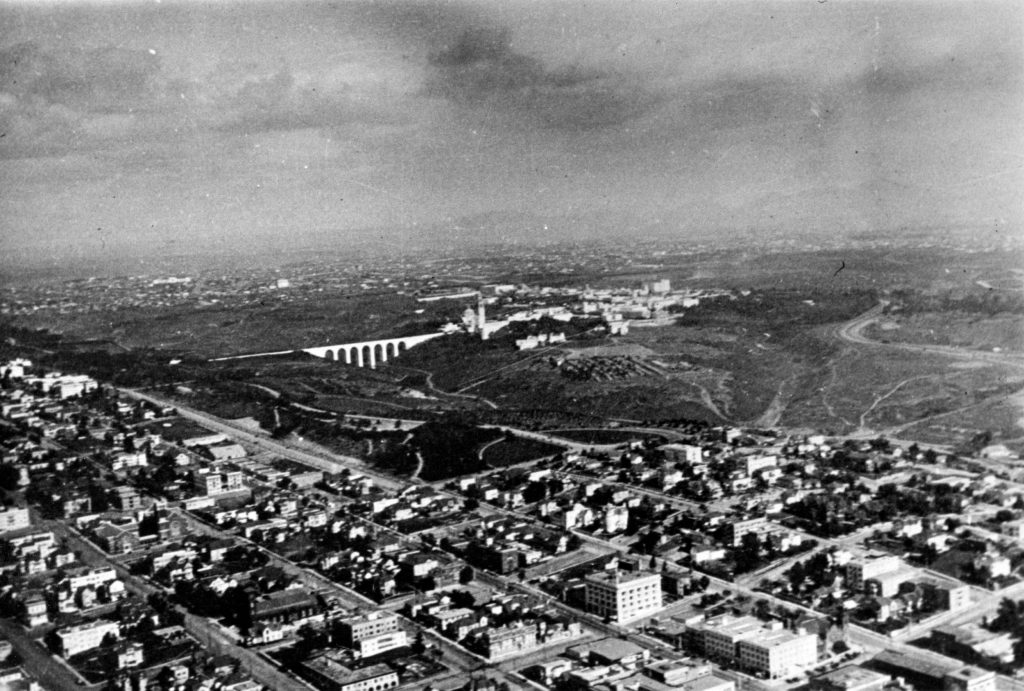
Later at home while brooding, it came to him a flash. A free flight in Jack’s balloon would be almost as good as a plane ride. Think of the things he could shoot: the city, the big Navy ships in the harbor, the site of the new exposition1The Panama-California Exposition of 1915-16. Cabrillo Bridge would look great from the air. So would Hotel del Coronado. Would Jack go for a free flight? He must have thought about testing his skill as a pilot. Might even be planning it now. He had better talk to the guy.
Forget it. Too risky. Too many problems involved: tracking the balloon to where it would land, landing it safely, getting it back to town. Jack could lose his business.
Still, it wouldn’t hurt to ask. He mentioned the matter the next day while Jack was securing the balloon for the night. Jack admitted it would be fun but he couldn’t manage it now, maybe later.
“But I’ll tell you what,” he said, “I have an idea; been thinking about it a while. Can’t explain it now; it’s something you have to see. Be here tomorrow. Bright and early. Bring your camera.”
Harry arrived at the site early next day but saw nothing to give him hope. The balloon was in place, Jack was there with his helpers and the gawkers were standing around. So what’s the big surprise?
A piece of wood attached to a line to the basket – that was the big surprise.
“What is it?” he asked.
“It’s a perch,” said Jack. “You can take your pictures from this; you’ll have it all to yourself and I won’t have to charge you a cent.”
A joke, thought Harry. Jack was putting him on. He inspected the “perch.” Eighteen inches wide, six inches across, two inches thick, varnished, attached by line to the basket. Take pictures from that? A thousand feet in the air?
“I’d have to be crazy,” he said. . . .
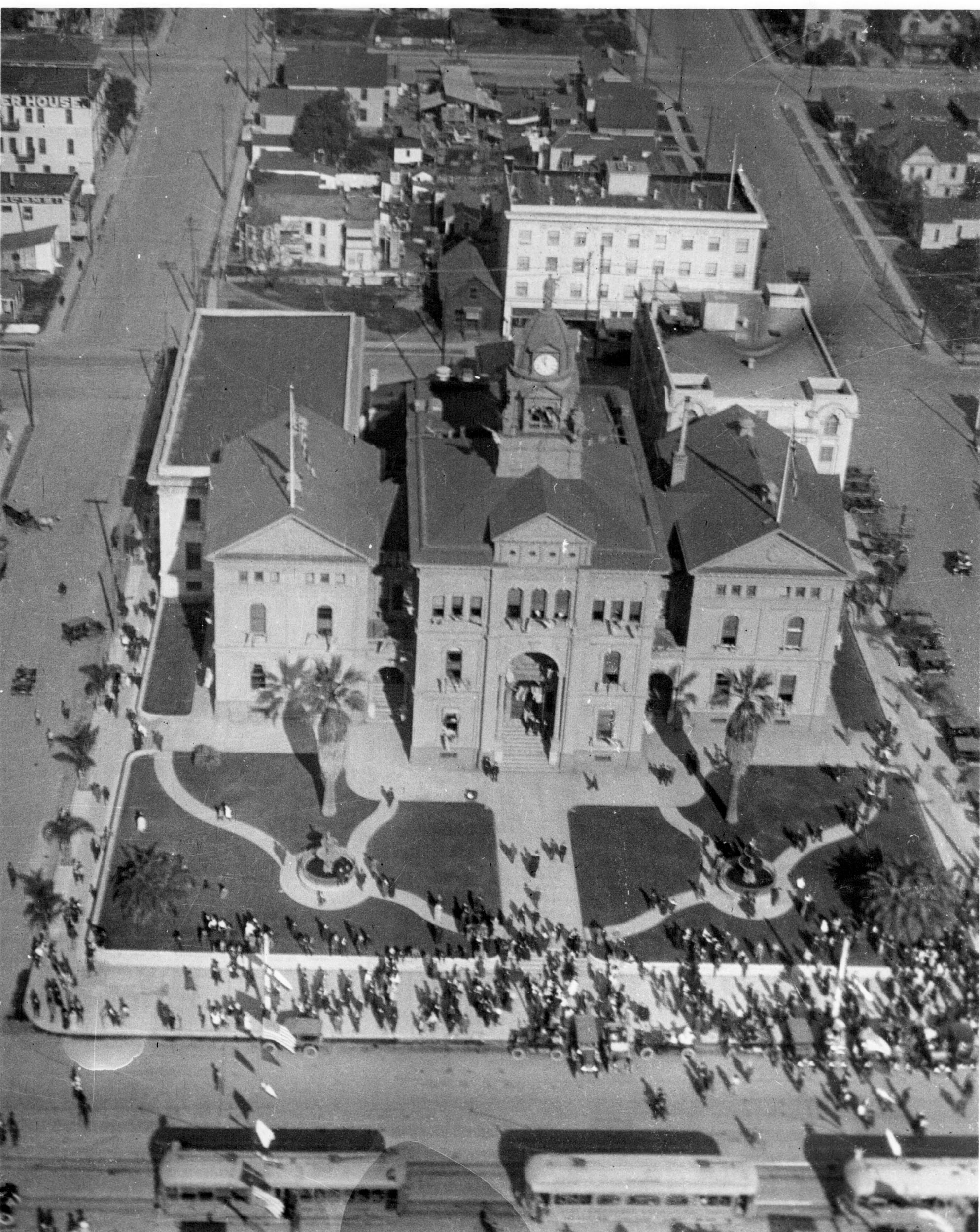
Seated on the perch, framing the courthouse below there was only this one little drawback: the board cut into his bottom. As for taking the pictures, it was easier than he’d expected; put the camera strap around your neck, hold the line with one hand and bang away with the other. No problem. As long as he kept his balance. He had tested the board for strength and felt it would hold his weight. He knew he could handle the height. A bit of a flutter at first; nothing to it then. He could even reload his camera. The secret was keeping his balance.
He took his time. Shot the courthouse a couple of times, it was right beneath him. Then by kicking his feet he swung around and there was harbor, the skyline, and downtown San Diego. He shot them all. But that was it. He was limited in what he could shoot – but boy if they cut this baby loose it would be almost as a plane flight –
He came back to the ground to a round of applause from the crowd and a pat on the back from Jack. Before leaving to deposit his film Jack suggested he try it again tomorrow.
“There’s nothing more to shoot,” said Harry.
“Fake it,” said Jack. “As a special favor to me. Two more days and maybe we’ll think of that free flight.”
The crowd was triple in size when Harry arrived next day and when greeted with whistles and cheers he knew he was being exploited. His stunting had drawn the crowd and would lead to a pickup in business; just as Jack had expected, the dog. But that’s OK. He had his aerial pictures and a free flight might be in the offing. If the crowd considered him foolish, that was fine with him. As for the stunting – a piece of cake. As long as he kept his balance.
He had brought an extra camera. He gave it to a friend and asked him to take his picture while he was up on the perch.
“Shoot when I wave my hat.”
While waving his hat for the picture he was hit by a gust of wind which knocked him off balance and for a moment it appeared he would fall. But so great was the strength of his grip and so quick was his reaction he righted himself on the perch before his hat hit the ground. The crowd below, watching in heart stopping silence, cried out in cheers of approval. But Jack could see by the way Harry was hugging the line he was not his cocky, old self. Using the winch he employed to raise and lower the rig he brought him down to the ground.
Standing on shaky legs, supported by Jack and a friend, Harry acknowledged his fans with a feeble wave of his hand. And when he’d regained the power of speech he announced he was packing it in.
“Think it over,” said Jack. “Never make hasty decisions. Besides, a gust of wind like that probably won’t happen again.” But Harry stood fast, one of his reasons being that never before had he felt a pounding this hard in his chest – and he was a guy who had walked away from a plane crash.
“O.K.” said Jack, swallowing hard. “I understand. Glad you got your pictures.”
He said nothing about a free flight and things went on as before. Can’t complain, thought Harry. He’d gone back on his promise to Jack; he owed him another stunt which he was not about to perform. So forget about the free flight.
Then, one week later, out of the clear came Jack’s magnanimous offer.
“Get ready, Harry,” he said, “we’re taking that free flight I promised. Tomorrow. You can get all the pictures you want. What do you say? Are you game?”
Of course he said yes, he jumped at the chance. Good, old Jack, the man was a real pal….
* * *
The tug he felt at the seat of his pants as he stepped away from the basket brought him back to the present. He checked the rim and determined the cause: Jack at work with the varnish again; a spot on the rim was tacky. Annoyed as he was he couldn’t blame Jack who kept his rig looking sharp to tie in with his pitch to the crowd, a pitch he’d shaped and perfected, and though a bit of a stretch, amazingly close to the truth:
“This bag is made of leak-proof fabric, precisely cut panels pieced together with double stitched seams and covered with three coats of varnish; the Gondola was made in London and is stout as the day it came out of the factory.”
In describing the passenger car he never said “basket.”
“People feel safer in a gondola,” he explained, “especially at two thousand feet.”
Whatever it was, thought Harry – passenger car, gondola, or plain wicker basket – it was filled to the brim with sand bags and sat firmly on the ground.
Harry acknowledged the need for the pitch and never challenged the claims, but it was obvious to him that some of the seams in the old gray bag were beginning to widen, and the hemp that embraced it had a suspicious number of knots. And he’d heard it said the crude cloth sign, GOOD EATS AT NEWTON’S CAFE, covered a sizeable rip that Jack had sewn by hand. Still, it went up every day, three in the basket, one dollar apiece, fifteen minutes at 2,000 feet – and plenty of satisfied customers. No question this baby could fly. And if things went according to plan, today it would soar on a free flight – with Harry Bishop aboard, getting his aerial pictures, pictures he’d be able to sell. Or possibly be able to sell.
Harry looked up at the globular mass, majestic as ever, dwarfing the buildings nearby – and saw that something was wrong. The balloon was straight overhead; it should be leaning toward Broadway, pushed by the offshore breeze. The air was still, no offshore breeze, the courthouse flag hung limp. A Devil Wind was brewing!
He wondered what Jack would say. He was new in town, might not have heard that at any time this time of the year a northeast wind could come whipping in from the desert, kick up a dust storm, knock over fences, topple bushes and trees – and blow a balloon out to sea. He would have to be warned –
Maybe not. Maybe the wind will be mild. Better keep quiet, see what develops; no sense in alarming him yet. For himself, he would be willing to gamble – he wanted those aerial pictures – but he had his doubts about Jack. Jack and his partner had a good chunk of money tied up in that monster balloon – $400, they said, and worth a good deal more. Jack would be wary of taking the risk.
But as time went by he felt his spirits lift. If it stayed quiet like this – and he had a hunch it would – Jack might agree to the launch. Meanwhile, nothing to do but wait. And keep his fingers crossed.
He looked at the sand bags inside the basket, picked one up, guessed its weight at eight or ten pounds and tossed it back on the heap. They would have to discard all but a few or they would never get off the ground. Keep some for ballast, Jack had explained. If you want to go higher, throw out some sand; to make it go lower, open the valve at the top of the bag and let out a bit of the gas. Tricky, of course. Pull the wrong line and you rip out a panel and splatter yourself on the ground. Leave it to Jack, he’s the man for the job.
Off to the side where the balloon cast a shadow – (a good sized shadow at that; the bag was 30-feet in diameter and held 40,000 cubic feet of coal gas) – was a small group of men sharing the shade and staring at Harry, the crazy young fellow who sat on a perch under that bag way the heck up in the air. Fine with him, let them stare. If they were looking for more of the same, too bad; his stunting days were over. Today he would soar on a free flight and get his aerial pictures; they could stand and stare.
He would have his choice of shots: new Marine barracks north of the bay, flying fields on North Island; exposition buildings in Balboa Park, big Navy ships in the harbor. There was plenty to shoot in this growing city – 70,000 by now – and his eyes became moist as he thought of the chance he was getting. Funny how things had worked out; that magnanimous offer from Jack just when he’d given up hope.
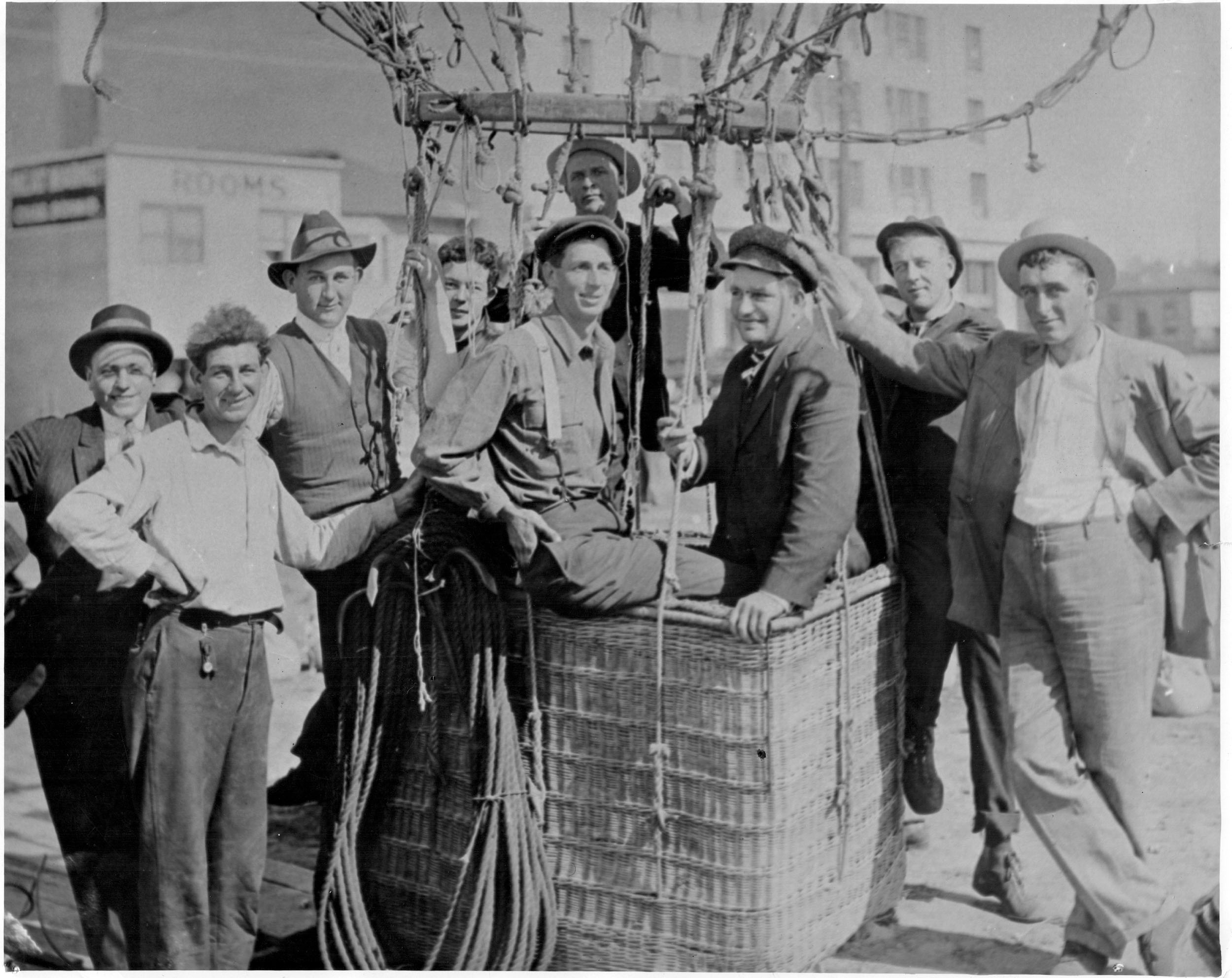
The youth came back. “Jack’s on the way,” he said. “He’s talking to Mr. Newton.” They exchanged smiles. Jack had made the arrangement – free meals for the sign – before he had sampled the food, and it was no secret now that he would rather be paid by fee.
More people were now at the site, twenty or thirty at least; standing quietly, some of them chatting, others just staring, but all of them keeping their distance; no one allowed near the rig till Jack got there and took charge. No one but Jack’s younger brother and Harry.
“There he is,” said the youth, giving Harry a nudge and Harry followed his gaze: a man in a dark grey suit and wide brim hat approaching from Broadway, his manner suggesting substance and stature, his badge proclaiming his status: city fire marshal. He stopped to chat with a man in the crowd, edged himself into the shade but kept an eye on the big balloon he knew was filled with coal gas – enough to burn up the town.
“He said he’d be here,” said the youth. “He doesn’t trust Jack after the ruckus they had.”
Harry looked blank and did not respond. What ruckus? he wondered. The fire marshal and Jack? About what? Something to do with the gas? A leak in the big balloon? He lifted his eyes to the bag. Seemed tight as ever to him.
“About releasing the gas,” said the youth.
Harry looked up again. Maybe it was a bit soft. Maybe the flight was off. That would be hard to take. Something was up and he hadn’t been told.
Looking at Harry standing in silence – deadly silence at that – it dawned on the youth he’d been talking too much, his companion knew nothing about it. But now that the cat was out of the bag he might as well explain.
“I thought you knew – the gas is losing its lifting power, he wants to replace it as soon as he can, but the fire marshal won’t let him do it in town. Might cause a fire, he said. That’s why Jack is taking it up – to somewhere out in the country.”
His voice trailed off with a weak “I guess he didn’t tell you –“
You wouldn’t know by looking – he always wore the mask – but Harry was seething inside. The “magnanimous” offer was tainted and he was a gullible greenhorn. It was not a reward for his stunting and it wasn’t a matter of friendship. Jack needed someone to help him; it was nothing more than that. But why the foolish deception? Did he think he would chicken out?
The youth, sensing Harry’s displeasure, stood quietly by, embarrassed, wishing he could absent himself before the confrontation. After a moment or two he struck his head with the heel of his hand and said, “Darn, I forgot the doughnuts; I’ll run back to Newton’s and get them.”
The tactful departure was unnoticed by Harry who was pondering the recent disclosure and thinking unkindly of Jack. But when Jack arrived five minutes later Harry’s posture had softened. So what if Jack had deceived him? They would still go on the free flight; he would still get aerial pictures. He would tell him he knew the score but would not say anything rash. His cold and haughty manner would show him how he felt.
Jack apologized; regretted he hadn’t had time to brief him. He’d been busy planning the flight, getting someone to track them and obtaining his partner’s approval. The trouble was, the old stale gas was losing its lifting power and he had to replace it with new stuff; he had wanted to release it slowly over a period of days – there would have been no danger – but the fire marshal hadn’t seen it that way; had insisted he do it elsewhere; if not he would shut him down. He had intended the flight for later (“believe me, Harry, I did”) but he had to act fast; he had no choice in the matter. Harry could understand. As for the landing, that might be tricky. They would look for a likely spot and if things worked out the man he had hired to track them would meet them with his truck. But whatever developed he knew he could manage with the help of a good, steady hand; one who would stay cool in a crisis. Who better than Harry Bishop? Known for his courage and spirit.
Wanting those aerials as much as he did Harry could easily forgive the deception, not to mention the soft soap. Besides, he had figured him out. Jack was a businessman – an Easterner besides – had different values – different methods – and a funny way of talking – look how he says gondola – GONdola for crying out loud –
Having settled that, Harry discounted the danger. Planes were plunging about in the sky, buzzing the fields and crashing routinely; by comparison this would be tame. Aside from the landing, of course, which, as Jack had said, might be tricky. But so what? He had crashed in a flying boat and had paddled away from the wreckage.
Jack’s deception had solved one problem at least. He no longer felt compelled to mention the Devil Wind. Or Santa Ana. Whatever they called it. Jack hadn’t leveled with him and two can play that game. For himself, he was willing to gamble. Anything for aerial pictures. Besides, he had a hunch that the wind would stay mild – and Harry had faith in his hunches. . . .
Jack said, “it looks like a perfect day; no wind at all; we’ll be over the city a while – until the offshore breeze returns.”
“Fine,” said Harry, “let’s go,” and felt not a morsel of guilt.
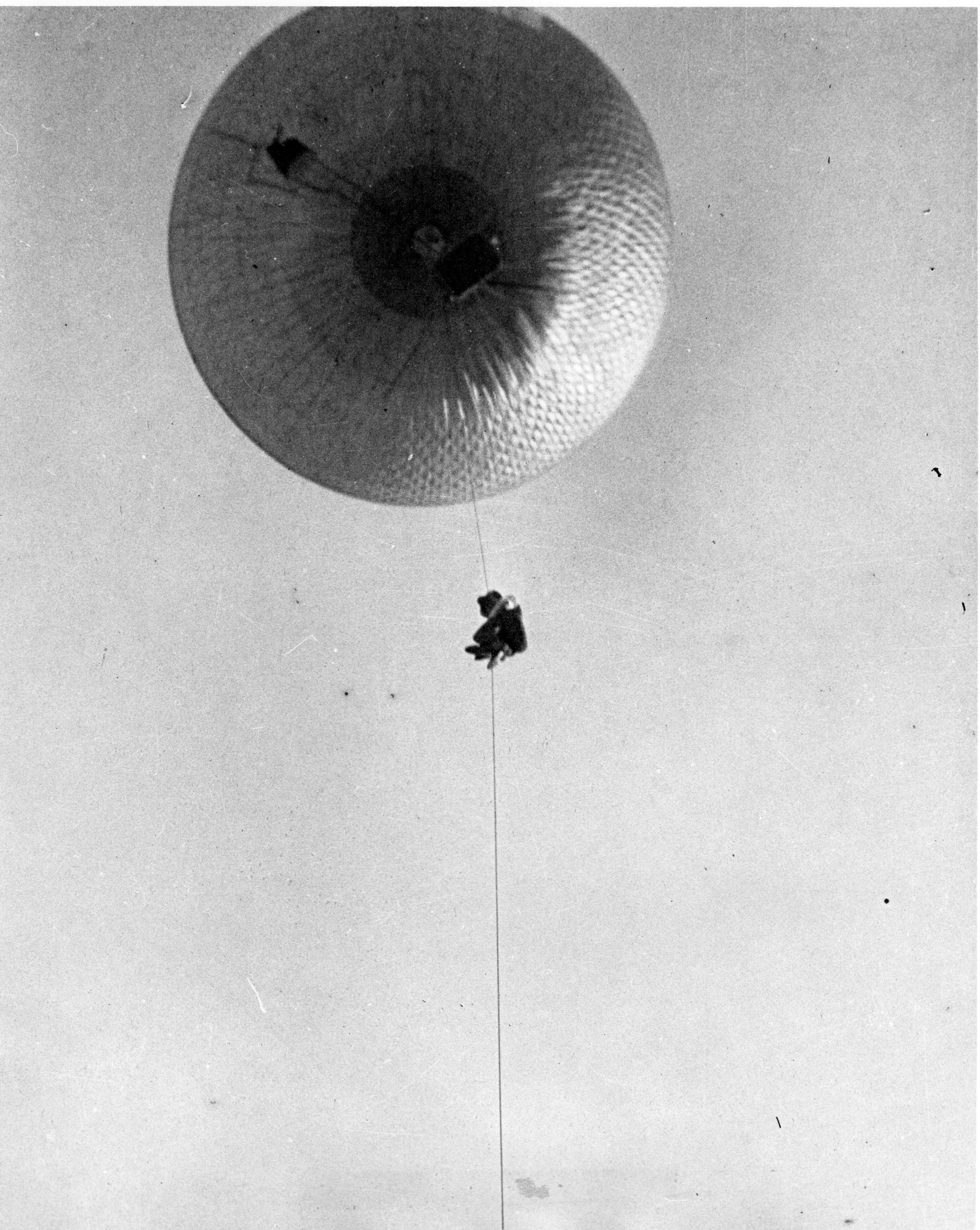
The adventurers took off after posing for pictures and acknowledging the cheers of the crowd. The balloon rose slowly, and Harry, viewing the sights from this silent, new world, almost forgot his purpose. It was only when Jack pointed to his camera case that he took out the Kodak and snapped off some shots: downtown as seen from the air; all the ships in the harbor, the new exposition grounds – pictures he hoped he could sell.
They hovered over the city and while Harry looked for shots, Jack held forth on the weather: conflicting air currents would keep them over the city for now, he explained, might even take them a bit out to sea, but Harry wasn’t to worry; the offshore breeze would be coming in soon and push them east for the landing.
“So Harry get your pictures while there is something to shoot. You don’t want to be working that camera while we’re out in the boondocks looking for places to land.”
Harry, suspecting that Jack was not the expert his lecture suggested, continued to husband his shots. Based on his layman’s knowledge there would be no offshore breeze for several more hours at least. His only concern was a full blown Santa Ana. If one came up they might wind up in Hawaii.
Jack fussed with ropes and lines, pulling at this and testing that and the balloon continued to hover. At first it was gradual, a gentle nudge toward the bay. But then the wind picked up and pushed them toward the ocean, and progress was steady.
Watching the skyline grow smaller Harry knew he had blundered. This was a pure Santa Ana, a powerful, scorching wind – and it was blowing them out to sea. Just ahead were the Coronado Islands, off Baja California, the neighbor to the south. And there in the distance was a Navy ship at gun drill. Harry grew keenly attentive; forgot the seaward drift. This was something to see – a Navy ship at gun drill and he was watching it from a balloon. He got his camera ready. First he would see a tiny puff of smoke and seconds later hear the muffled report. Soon they’d be over the ship. What a break.
Jack was less enthused. “What the hell is going on?” he asked.
“It’s a Navy cruiser at gun drill,” Harry explained. “What did you think it was?”
“That’s not what I meant,” said Jack. “What I mean is – I don’t understand this wind – we’re moving too fast –“
Harry sighed. He explained as best he could, then seeing his friend turn white, offered him an option: splash down at sea and be taken aboard by the crew. Jack, after a moment of thought, pulled himself together and shook his head. Lose his balloon and his business? He would wait for the wind to change no matter how long it would take. Harry agreed. BLUNDERING BALLOONISTS CRASH AT SEA would be hard to take. And so would a story deriding the amateur aeronauts who foolishly launched a balloon in the teeth of a Devil Wind and sailed it over a Navy cruiser at gun drill. They would never live it down. He would stick with Jack; sooner or later the wind would shift and take them back to land. Assuming they stayed aloft.
The drift continued toward the Navy ship and conversation was suspended as the tiny puffs of smoke became very large puffs of smoke and the muffled reports became deafening blasts that rocked the flimsy basket leaving them stricken with fear.
O’Connell saved the day by discarding a number of sand bags to allow the balloon to rise. Up and up it went – to 8,000 feet or so, well above the bombardment. There it was caught by a current of air that swept it round in a circle and started it back toward land.
“Our troubles are over,” said Jack, and Harry was greatly relieved though he had failed to shoot the gun drill – he’d been holding on like a coward and it made him wonder: was he really cut out for this stuff?
They were approaching the shore at a reasonable rate of speed; soon they would land and finish the job and be met by the man with the truck. Jack was satisfied. Things were working out after all.
He lowered the balloon by pulling the rope to the gas valve. Now he was ready, he said, for the final approach and the landing.
But they crossed the shoreline south of the border and were abandoned by the wind, and hovering over coastal sage and salt marsh they dismissed the thought of landing. They’d be on the southern side of the border. They would wait. The wind was bound to return. It did, but from the wrong direction; it moved them back to sea and abandoned them once again, which caused the men to curse and urge the wind to make up its blasted mind. It did. With a vengeance. It powered them toward the shore at a shocking rate of speed. Numbed by the frivolous treatment, surprised by the rush toward shore, they agreed the soft white sand of the beach would be the place to land. And as soon as they possibly could. Harry was told to dangle the anchor over the side and drop it on command. Jack released more gas and when the balloon descended it seemed to pick up speed and they sailed beyond the beach. They raced along over valleys and gorges, directly toward the mountains. Jack threw out the drag line hoping to slow the balloon. When that maneuver failed he shouted to Harry to drop the anchor. Harry obeyed and peeping over the side watched it hit the ground.
When they regained their senses, they stood on wobbly legs, checked their cuts and bruises and judged them superficial. But the balloon had been ripped apart and the basket badly damaged, and there in the dust and sage brush were remnants of Harry’s camera; scattered about was the film. The balloon when stopped in its flight had swung in a graceful arc to settle on clumps of prickly bear cacti and had slowly started to shrink, fouling the air with coal gas.
“Didn’t you see the telephone lines?” asked Jack when they were able to talk.
“What telephone lines?”
“The ones the anchor hit. You shouldn’t have dropped the anchor.”
Harry had nothing to say.
They looked for signs of life. When Harry got his bearings he said they were on Otay Mesa in a sparsely inhabited area, south of San Diego, near the Mexican border and a long way from home by foot. There were no houses in sight so the men decided that a link to civilization could best be found by walking north along a dirt road adjacent to the string of telephone poles. And so they started, leaving behind the wreckage and several utility lines dangling from telephone poles, which they were happy to see were still erect – though leaning a bit to the east. They walked along in silence, a somber photographer who was pondering his latest setback and a gloomy businessman who was wondering how to tell his partner their four-hundred-dollar balloon had died on Otay Mesa.
They reached a farm house an hour later, knocked on the door and explained to the woman who answered they’d had a “minor mishap” and wondered if she could suggest a means of transportation back to San Diego. The woman said her husband was out with the horse and wagon and might not return for awhile. They could have used the telephone to call to the city for help “but the darn thing went dead about an hour ago – and the electricity doesn’t work either.”
“Really?” said Jack.
While the two adventurers stared blankly at each other wondering what to do, the woman’s husband arrived with the horse and wagon. Jack, after judging his man, took him aside and explained the matter fully. The farmer, after hearing the story, said he would be able to use the fabric to cover his haystacks. A bargain then was made: a trip to town for the fabric. The farmer would take them back to the site of the crash to salvage what they could; would drive them to the city, report the interruption of service but say nothing about the mishap. . . .
Much of the long ride home was endured in thoughtful silence. They sat in the back of the wagon with all that was left of the business: anchor, lines, and drag ropes and a badly busted basket. What could they say? Jack had lost a business; his four-hundred dollar balloon would be used to cover a haystack. Harry had lost his camera and the pictures he thought he could sell. They had foolishly taken a balloon on a free flight while a Devil Wind was blowing and had been blown out to sea. They had been rocked by blasts from a Navy cruiser’s guns (“was that only a cruiser?” asked Jack) and in crashing had broken utility lines. Battered and bruised they had hiked until ready to drop and now were on the floor of a wagon drawn by the slowest horse in the county. Harry couldn’t help it, he chuckled; Jack gave a sad, little smile.
“Harry,” he said, “you have to admit – that was a heck of a ride.”
Harry said “You bet.”
When they shook hands and said goodbye they vowed to meet again, have a drink and relive the adventure.
But they never did.
* * *
Brief accounts of the flight appeared in two newspapers. One report said the flight was made by “Captain Jack O’Connell” to “make government readings of contrary air currents over San Diego for the weather bureau.” The other story said, quoting Captain Jack, the flight was made “to prove that a balloon could be taken out to sea and successfully piloted back to land.”
Harry said later he was unaware of Jack’s involvement in “government research,” not to mention his title of captain. “He sure fooled me,” said Harry. As for the details omitted in both accounts – the downed utility lines – he said “the reporters didn’t ask.”